


Cambodia

If you’re planning your first visit to Angkor Wat, this is the guide I wish I had before I went. Because yes, it’s magical, surreal, and one of the most unforgettable places I’ve ever experienced… but it’s also HUGE, hot, slightly overwhelming, and requires a bit of strategy if you want to truly enjoy it.
Here’s everything you need to know before visiting Angkor Wat for the first time, from tickets and temple routes to what to wear, what to eat, and how to avoid the classic rookie mistakes.
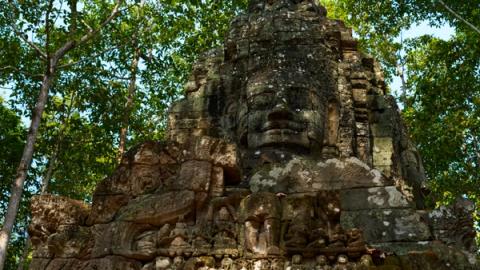
Angkor Wat is actually just one of the temples, but most people use the name to describe the entire Angkor Archaeological Park, a massive UNESCO World Heritage site just outside Siem Reap in Cambodia.
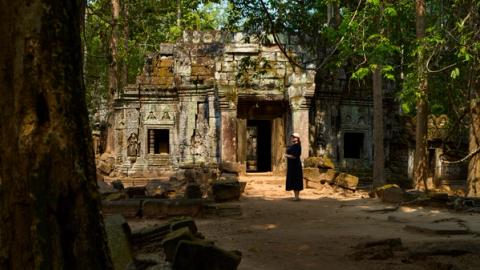
We’re talking 400+ square kilometres filled with ancient temples, jungle-covered ruins, intricate carvings, and some of the most impressive architecture in the world. And trust me when I say that it’s even more breathtaking in real life than you can possibly imagine.


I recommend basing yourself in Siem Reap, a small but lively town just 20 minutes from the Angkor temple complex. The city is charming in itself and absolutely worth a couple of extra days besides just visiting the temples. You get a mix of great restaurants, cute cafés, and relaxed nightlife, plus it’s close enough to the temples that early mornings don’t feel impossible. If you need more tips on what to do there besides the temples, check out my Guide Beyond Angkor Wat: The Best Things To Do in Siem Reap.

Browse the highest-rated tours and experiences here.
Siem Reap has an international airport (SAI), with direct flights from places like Bangkok, Singapore, Kuala Lumpur, and places in Vietnam.
From the airport, it’s about 45–60 minutes into town and there are multiple ways to reach the city, all of them pretty straight forward.
First of all most hotels offer pick-up service so if you just want everything planned in advance that's the easiest option. Alternatively there are Tuk-tuks and taxis ready to pick you up form the airport when you land. You can use the app Grab to book them once you arrive or just jump in one who is already there.
A more budget friendly option is to take the local bus, which is very easy and straight forward. As soon as you exit the airport you just say you want to take the bus and someone will help you buy your ticket in cash or take you to the counter so you can pay by card and show you to the bus. It runs multiple times per day. If you take the bus, they also offer a free Tuk-Tuk ride from the bus station in Siem Reap to your hotel. We did this on our last visit and it was super easy to navigate.
You can also get to Siem Reap by bus or minivan from Phnom Penh, Bangkok, or other cities in Cambodia, Laos and Thailand. It’s cheaper, but expect long travel days.
I recommend booking all your long bus or train rides using 12GoAsia to find the best prices and departure times. I always use them when I’m booking my transportation in Asia.
'%3e%3cpath%20d='M47.04%2025.9043H0.959961V37.3329H47.04V25.9043Z'%20stroke='%23987F61'%20stroke-width='2'%20stroke-linecap='round'%20stroke-linejoin='round'/%3e%3cpath%20d='M7.67988%2037.333H2.87988V43.0473H7.67988V37.333Z'%20stroke='%23987F61'%20stroke-width='2'%20stroke-linecap='round'%20stroke-linejoin='round'/%3e%3cpath%20d='M45.1203%2037.333H40.3203V43.0473H45.1203V37.333Z'%20stroke='%23987F61'%20stroke-width='2'%20stroke-linecap='round'%20stroke-linejoin='round'/%3e%3cpath%20d='M42.2399%2020.1904H5.75992C3.64792%2020.1904%201.91992%2021.9047%201.91992%2024V25.9047H46.0799V24C46.0799%2021.9047%2044.3519%2020.1904%2042.2399%2020.1904Z'%20stroke='%23987F61'%20stroke-width='2'%20stroke-linecap='round'%20stroke-linejoin='round'/%3e%3cpath%20d='M39.3598%204.95215H8.6398C6.5278%204.95215%204.7998%206.66643%204.7998%208.76167V20.1902H43.1998V8.76167C43.1998%206.66643%2041.4718%204.95215%2039.3598%204.95215Z'%20stroke='%23987F61'%20stroke-width='2'%20stroke-linecap='round'%20stroke-linejoin='round'/%3e%3cpath%20d='M18.2396%2012.5713H12.4796C10.3676%2012.5713%208.63965%2014.2856%208.63965%2016.3808V20.1903H22.0796V16.3808C22.0796%2014.2856%2020.3516%2012.5713%2018.2396%2012.5713Z'%20stroke='%23987F61'%20stroke-width='2'%20stroke-linecap='round'%20stroke-linejoin='round'/%3e%3cpath%20d='M35.5199%2012.5713H29.7599C27.6479%2012.5713%2025.9199%2014.2856%2025.9199%2016.3808V20.1903H39.3599V16.3808C39.3599%2014.2856%2037.6319%2012.5713%2035.5199%2012.5713Z'%20stroke='%23987F61'%20stroke-width='2'%20stroke-linecap='round'%20stroke-linejoin='round'/%3e%3c/g%3e%3cdefs%3e%3cclipPath%20id='clip0_42_2225'%3e%3crect%20width='48'%20height='48'%20fill='white'/%3e%3c/clipPath%3e%3c/defs%3e%3c/svg%3e)
Find all the best Hotel deals here
The Angkor complex is huge, way bigger than you think. Walking between temples isn’t realistic, so you’ll need some kind of transport.
Most people (including me) hire a tuk tuk driver for the day, and honestly, it’s the best decision you can make. Not only is it affordable, but having someone who knows the routes, waits for you, and always has cold water ready in the heat is a game changer.
There are multiple ways to do it, you can book one online in advance if you want to have everything ready before you leave home, alternatively just ask a Tuk-Tuk driver in the city if you have extra time or you can get help from your Hotel to find a good Tuk Tuk driver when you arrive
It’s important to remember that they’re not guides and many have limited English, so if you want information along the way it's important that you hire a guide as well.
The price for a Tuk-Tuk varies a bit depending on how big the Tuk-Tuk is and how long the route is. The standard price is around $15-25 per day. If you’re going to some of the more remote temples it can be about $30 per day.
If you're short one time in Siem Reap and want to have everything booked in advance, I recommend this private & full day tuk tuk tour.
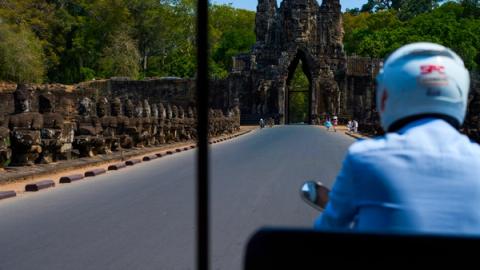
If you want to explore the complex on your own, you can choose to do so on a bicycle. I honestly think it looks like so much fun, plus it's a bit cheaper than renting a Tuk-Tuk for the day.
However, the distances are quite long, even on the smaller circuit (I’ll come back to what that means later) and the heat is pretty intense during the day. And after each temple you’ll be glad you have someone there with cold water and a spot you can relax in. But, it’s possible and probably very fun. Your hotel can be helpful in recommending the best bike rental close to where you’re staying.
Yes, you can also rent a private car and driver to take you around the complex. I personally loved the Tuk-Tuk, but if you want more comfortable seats or air-condition for instance, then a private car is a great option, especially in the hotter moths around April. You can book this online or through your hotel as well.

The first thing you need to get yourself is an Angkor Pass.
You can’t buy tickets at the temples themselves, you’ll need to either stop at the official Angkor Ticket Center (your tuk tuk driver will take you there), or buy it online in advance.
An important note her is that for some reason I keep reading posts saying that you need to show up physically to get your ticket and if you want to see the sunrise on your first day you need to meet up physically the day before to buy a ticket. This might have been the case a couple of years ago, but now you can enter with your digital ticket as long as you’ve taken a screenshot of the QR-code. We never needed to show anything else for any of the temples we visited and never had a problem.
There are two things to keep in mind if you want to buy tickets online.
Firstlhy, you need to have enough battery on your phone to last the full day. If you think that might be a problem then you need to get a physical copy as well.
Secondly, to buy the ticket online you need to upload a photo of yourself. If this is problematic for you, then the best way is to go to the ticket office where they take a picture of you to add to your ticket,
So in summary, the absolute easiest way to buy your tickets is online, take a screen shot of the ticket and just show up.
There are three different ticket options to choose from when you want to visit the Angkor Wat Complex.
If you choose to buy a 1-Day Pass it's obviously only usable for one day. It’s however important to know that you can come in the morning, watch the sunset and some temples, head back to your hotel for a couple of hours to relax and go back later on and see more as well as the sunset for instance. This is a pretty intense day, but my point is that you can come in to the complex as many times as you want during that one day. This rule is the same for every type of pass.
When it comes to the multiple day passes you don't need to visit the complex on consecutive days. If you buy a 3-Day pass you can spread the days you visit the temples over one week. If you buy a 7-Day pass its valid for a month so you can choose to enter the complex at 7 different days during a month from the first day you visit.
Pro tip: If you already have a ticket and you enter the complex after 5 PM, you can access the park for free, for example to watch the sunset. This is only valid if you already have a ticket. You still need to show your ticket, but they wont register the visit so you don’t spend a day of your pass.
For example if you buy a 1-day pass you can come at 5PM and watch the sunset at your temple of choice and come back the next day and spend the full day exploring as much as you want.
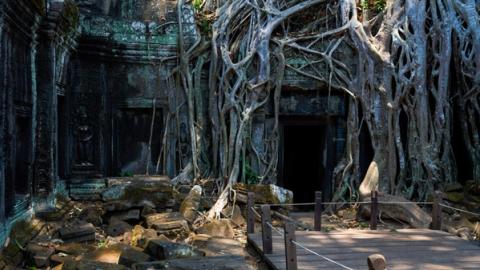
If it’s your first time, the 3-day pass is 100% the best choice in my opinion. I’ve been to Siem Reap and the Angkor complex at two different times. The first time I only bought a 1-day pass and it felt incredibly rushed and not something I recommend unless you just want to see the absolute highlights or your on a very tight budget.
On my second visit I bought a 7-day pass which for me was perfect because I stayed in Siem Reap for many weeks and just wanted to visit as much as possible but take some relaxing days in between. In addition, I got to see some of my favourite temples multiple times. I understand that this is a bit extreme for most people, but I truly enjoyed doing it like this.
For most people a 3-day pass is the best choice. You can choose to see the highlights and some lesser know temples, come both for sunrise and sunset if you want. Even if you decide after two days that you feel like you've seen enough it’s still cheaper to have bought a 3-day pass than buying two 1-day passes.

When you start planning your trip to Angkor Wat this is where a lot of people get confused, but it’s actually the key to planning your visit. So I will do my best to explain it so it’s easer for you to plan you trip.
Most of the temples are grouped into circuits, which are essentially suggested routes to take. There are 4 different routes already preplanned where most drivers stop by the same temples for each route. There might be some deviation but there are always some temples you absolutely visit in each circuit.
In addition there are plenty of temples in the complex not added to any circuit and that doesn't mean they're not worth visiting. Some of them are even better because there are hardly any people there. I’ll come back to this later on after I explain the circuits.
The two most popular circuits and the ones most people do are called the Small Circuit and The Big Circuit.


I personally use SafetyWing and highly recommend it for every kind of trip. Check their prices & plans here.
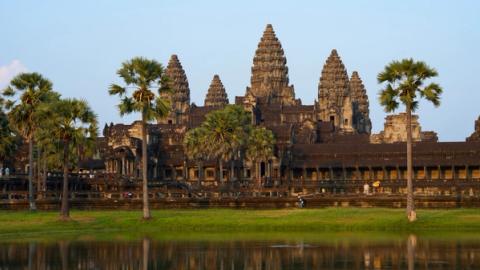
This is where you’ll find most of the ones you might have heard of before. It includes the biggest icons and a couple of smaller ones if you have time. The small circuit always include:
This is the busiest route, but also the most unforgettable. If you only have one day, this is where you should spend it.
I’ve done the small circuit multiple times and experienced that the drivers do take some liberties with other temples they choose to stop at. Sometimes they just stop at the 4 mentioned above, and sometimes they add a couple of other ones they like. If you have some specific temples you want to see you can ask them in advance and see if it matches the route.

I always set up an eSIM before flying so I'm connected the moment I arrive. Compare the best plans from Airalo here.
The Big Circuit feels more spread out and less crowded offering a completely different atmosphere. That being said, this circuit can definitely be quite crowded as well, especially during high season. A tip is to ask your driver to drive it in the opposite order so it feels a bit more peaceful. Temples that should be included in this tour are:


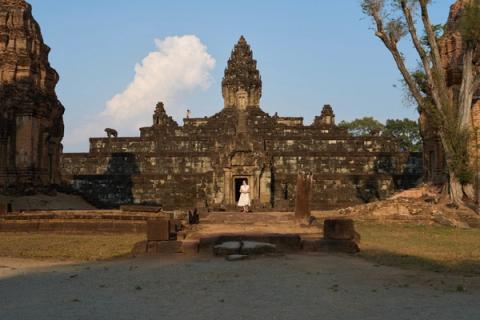
This circuit includes a couple of temples but also other activities as seen below. I personally only did the temples while doing this route. I skipped the shooting range as it's not my thing and I did the floating village another day. This circuit is often overlooked because it’s located in a completely different area than the two previous circuits. This does not mean it’s not worth visiting. I personally think the Bakong temple was one of my favourites. The fact that fewer people visit also means you have more freedom to just walk around and explore and take pictures without crowds.
The Roluos Group Circuit include:
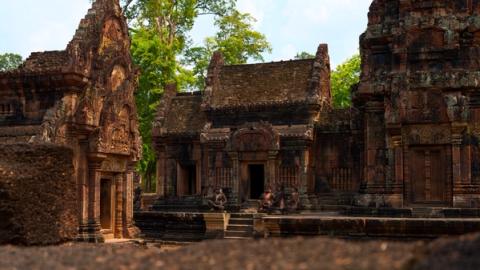
This circuit also includes a couple of temples but also other activities as seen below. This is the most widespread circuit and personally the one that makes the least sense to me. I would personally choose to add Kbeal Spean and Banteay Srei as sights worth visiting along with a trip to Kulen Mountain, and the Banteay Samre as an add on to the Big Circuit and just pay a bit more. I recommend doing this tour to Kulen Mountain or something similar to get the most out of your stay.
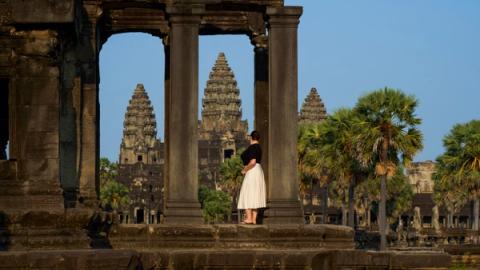
Because Angkor Wat is a religious site, there is a dress code and they do enforce it. On my first visit in 2014 there really wasn't anything said about it and most people wore shorts, including me. However, on my last visit in 2026 I didn't see a single person who weren’t covered up. Meaning the shoulders and knees were covered. I never saw it myself, but I’ve heard that they do turn you away if you're not dressed appropriately, so keep that in mind when planning what to wear.
It’s also important to remember that you’ll walk for hours on rocky and bumpy terrain, so wear comfortable shoes. I switched between my Birkenstocks and sneakers and it worked perfectly.
Every now and again I'll send you my latest travel updates and guides.

I knew it would be hot… but I didn’t fully understand just how intense it would feel. Temperatures range from 30–38°C (86–100°F). Keep in mind that on my last visit I came in April which is said to be the hottest month in Cambodia. It’s a bit better other times of the year, but don't underestimate the heat. It’s intense and there aren't many areas with shade.
The only real way to handle it is to start early, take a break in the middle of the day, and head back out later in the afternoon. I started walking amongst the temples at 8am many days, and even then it's pretty hot. So start even earlier if you can. And drink more water than you think you need.
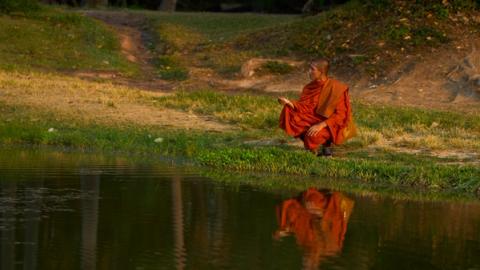
This is probably the most asked question and the answer is for me is both. For me personally it was an incredible experience, but I know people who thought it was too crowded and chaotic. I think the reason it was such a good experience for me was that we had a guide with us that day and he knew all the best spots to be at the different times of the morning. So instead of just walking straight to the water in front of the temple (like most people do), we started outside and moved closer and closer to the temple as the sun rose.
At first I was a bit disappointed, but the second we entered the temple area I saw one of the most stunning sights I've ever seen in my life. At that time we were way behind the crowds, and when we finally reached the water where most people had been standing, they were disappearing giving us more than enough space to just take in the views and enjoy.
For me it was a definite highlight of the trip, but try and stand further behind so you don't have to fight the crowds for the best shots. The sunrise is amazing no matter what. However, if you really want a picture of the sun rising in the reflection of the water, then you probably need to be at the front row and show up very early.


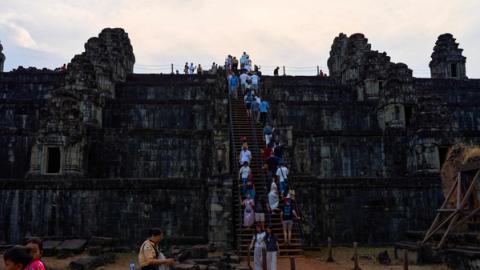
Many choose to stay in the complex to watch the sunset, and most people do this at a temple called Phnom Bakheng. I've done this twice, one time with the sun perfectly visible and the second time I couldn't really see the sun. My experience is a bit coloured by that last experience, but I personally think it’s a bit overrated.
I had imagined seeing the sun setting behind a temple, but what you in reality do is climb to the top of a hill and watch the sun set in the horizon from a temple. The temple in itself is very nice, but it’s not the experience I had imagined.
For me personally it was much more enjoyable to just spend some time at my favourite temples as the sun was setting and seeing them in the beautiful light that appears when the sun sets.
Find the highest rated tours and experiences here! Compare prices and book your activities in advance to get the most of your trip!
You won’t go hungry, but it’s not exactly a foodie destination. There are small local restaurants and food stalls scattered throughout the park, especially near the main temples. You’ll find simple dishes like fried rice, noodles, soups, and fresh fruit plus plenty of cold drinks and coconuts.
We ate at one of the restaurants one day and I can't lie and say it was particularly good. It serves it’s purpose and you'll be filled, but my advice is to bring more food with you of you can. We decided to bring our own sandwich on most of the longer days, and just ate it in our tuk-tuk.
If you’re heading there super early to see the sunrise, I recommend planning ahead and having even more food or snacks with you. After a couple of temples I was starving, so I’m very glad I had enough food.
For me, walking around in that intense heat and being a bit tired is enough, I can't add being hungry as well. That’s a recipe for a failed day in my book. So plan accordingly and bring enough drinks, food and snacks to make sure you have a pleasant day.
Most Tuk-Tuk drivers will give you cold water and have a cooler on the back of their Tuk-Tuk, but it never hurts to have more, and especially if you want to drink something else than water during the day. I experienced one tuk tuk driver who didn't have water, so it’s always a good idea to ask them in advance.
Here is a quick overview of the best neighbourhoods to consider when deciding where to stay in Siem Reap.
Siem Reap is relatively compact, so you don't necessarily need to stay right beside every attraction. Tuk-tuks make it easy to get around, and most visitors will arrange transport to Angkor Archaeological Park regardless of where their hotel is located. I would choose your area based on how you want your evenings to feel rather than simply looking for the hotel closest to the temples.
Below you’ll see my three favourite hotels that I recommend checking out first. This is my personal favourite, and I highly recommend staying there if you want a relaxing, but fun stay in Phong Nha.
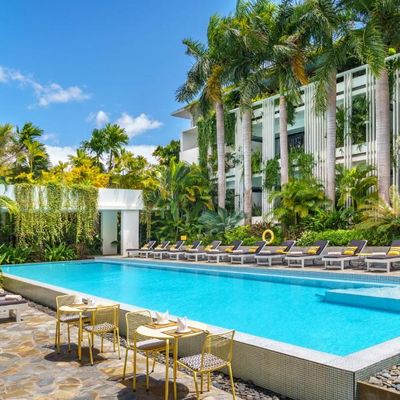
This is the definition of boutique perfection with mid-century design, tropical landscaping and an iconic pool. It feels stylish without trying too hard and somehow every detail just works.
Check prices and availability
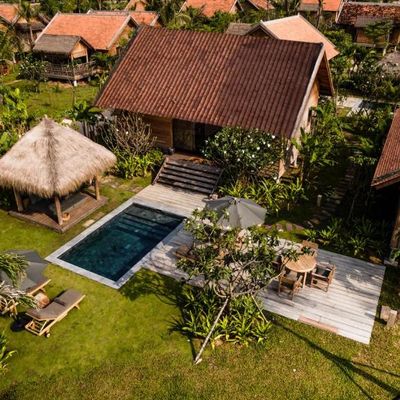
This hotel offers a different kind of luxury stay, with traditional Khmer-inspired villas set among rice paddies and lush tropical gardens. The property feels more like a peaceful countryside retreat than a conventional city hotel, with a beautiful pool, spa and plenty of space to slow down.
Check prices and availability
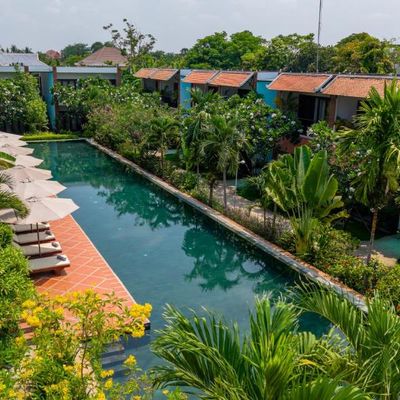
This is a great option if you want a tropical atmosphere without paying luxury-resort prices. The property has swimming pools, spacious rooms and traditional Khmer-inspired details, creating a relaxed setting away from the busiest parts of town.
Check prices and availability
Below you'll find a map where I've pinned my favourite hotels in Siem Reap to make it easier for you to navigate when you're looking for where you want to base yourself.
Angkor Wat is incredible, but it’s also intense. And the difference between an okay visit and an unforgettable one, really comes down to how you plan it.
Start as early as possible. Take breaks. Temple fatigue is a thing so don't try to see everything at once. Give yourself time to just sit, slow down, and take it all in.
Hire a guide, at least for one of your days, because it adds so much context to what you're seeing. And last but not least, make sure to stay hydrated!
Hopefully this guide has given you everything you need to plan where to stay in Siem Reap. To make planning the rest of your trip even easier, I've included all the resources I personally use when I travel.
Every recommendation is based on tools and services I genuinely use and would recommend to friends and family.
By using these links you help me continue to create free travel guides like this one.
Thank you for supporting Travels with Ingrid!
If you have any questions about travel in Cambodia, or just want to follow along as I travel the world full time, don‘t hesitate to reach out to me on social media.
I would love to connect and help out!
-Ingrid


