


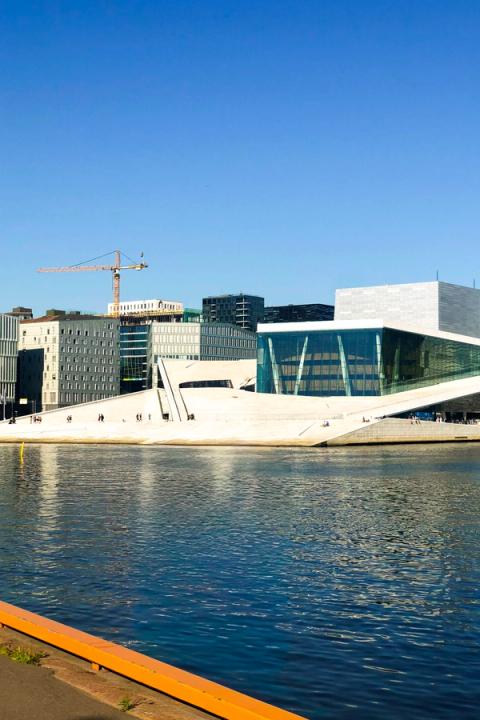
Norway

As a Norwegian, I'm always happy to recommend Lofoten to anyone planning a trip to my home country. It's one of the most spectacular parts of Norway, and what makes it particularly special is how much there is to experience in such a relatively small area. You can spend your days hiking to incredible viewpoints, visiting traditional fishing villages, exploring beautiful beaches or simply driving along the coast and stopping whenever you see something that catches your eye.
But where should you actually stay in Lofoten? That's a slightly more complicated question than you might think. The islands stretch across a fairly large area, and although the main road connects most of the popular destinations, driving between the different villages can take longer than expected. Choosing the right base can save you a lot of time and make your trip much more enjoyable.


In this guide, I'll take you through the best areas to stay in Lofoten, what each place is like, the main attractions nearby and the best hotels and accommodation options in each area. Whether you're visiting for the famous northern lights, midnight sun, hiking, photography or simply to experience the incredible scenery, you'll find an area that suits your trip.
If you're visiting Lofoten for the first time, I'd recommend staying in Reine or Hamnøy if you want the iconic Lofoten scenery, with dramatic mountains, traditional fishing villages and spectacular fjord views. However, these areas are quite far south, so they aren't necessarily the most practical bases for exploring the entire archipelago.
Svolvær is the best all-round base if you want restaurants, shops, activities and convenient access to the northern and eastern parts of Lofoten. Henningsvær is ideal if you prefer a charming fishing village with galleries, cafés and a creative atmosphere. Leknes and Ballstad are good choices for exploring the central part of the islands, while Ramberg and Fredvang are perfect if you want to be close to some of Lofoten's most beautiful beaches and hiking trails.
If you have enough time, I'd actually recommend splitting your stay between two or three different areas. This way, you won't spend too much time driving back and forth, and you'll get to experience more of what makes Lofoten so special.
Below you’ll see my three favourite hotels that I recommend checking out first. This is my personal favourite, and I highly recommend staying there if you want a peaceful, but practical stay in Lofoten.
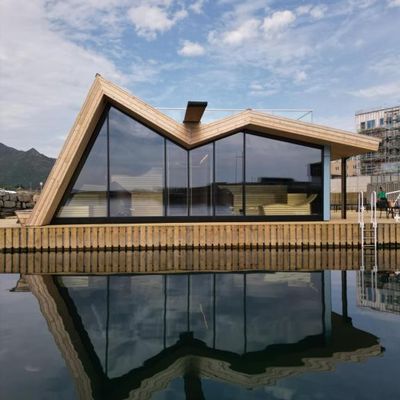
This is one of the newer and more upscale hotels in town, with a beautiful location overlooking the harbour. The hotel has modern rooms, a restaurant, fitness facilities and lovely views of the surrounding mountains and water.
Check prices and availability
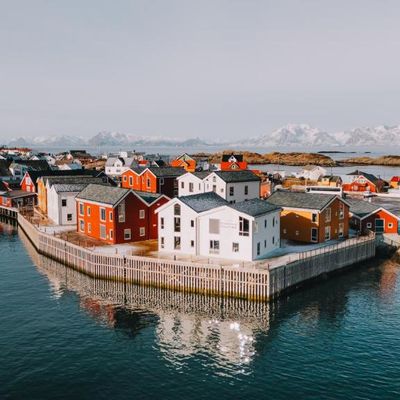
This is a stylish hotel right in the heart of the fishing village. The property combines traditional Norwegian architecture with modern interiors and has a beautiful waterfront setting. It's a great option if you want the comfort of a proper hotel while being within walking distance of the village's restaurants.
Check prices and availability
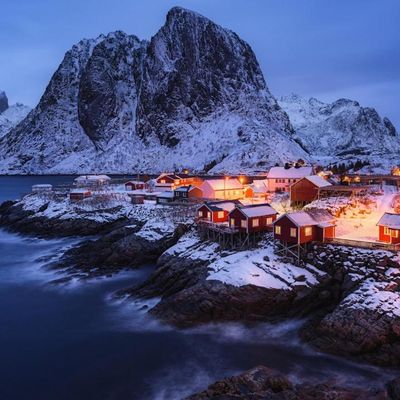
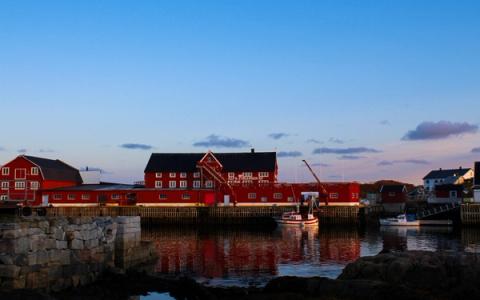
This is probably one of the most iconic places to stay in Lofoten, and you've likely seen its red fishermen's cabins in photographs of the islands. Located on Hamnøy, the property offers traditional rorbuer with modern facilities and beautiful views of the surrounding mountains and fjord.
Check prices and availability
Below you'll find a map where I've pinned my favourite hotels in Lofoten to make it easier for you to navigate when you're looking for where you want to base yourself.

Check out this full day tour that takes you to all the top sights in one day!
If you're visiting Lofoten for the first time and want a convenient base with plenty of things to do, Svolvær is a great place to start. It's the largest town in the archipelago and one of the main transport hubs, with a good selection of hotels, restaurants, cafés, shops and organised activities.
Svolvær is located in eastern Lofoten and has a slightly different atmosphere from the tiny fishing villages you'll find further west. It's more of a proper town, with a working harbour and everyday life alongside the tourism industry. While it might not have the same postcard-perfect setting as Reine or Hamnøy, it's a very practical place to stay, particularly if you're visiting without a rental car.
One of the biggest advantages of staying in Svolvær is the selection of activities available. Several RIB-boat trips, boat cruises, fishing excursions, kayaking experiences and guided tours depart from the harbour. You'll also have easy access to Henningsvær, Kabelvåg and some of the hiking opportunities around eastern Lofoten.
I'd recommend Svolvær if you want a comfortable base with restaurants and facilities nearby, or if you're visiting during winter and planning to join organised northern lights tours. If you're travelling around the islands by car, it's also a good place to spend your first or last night.
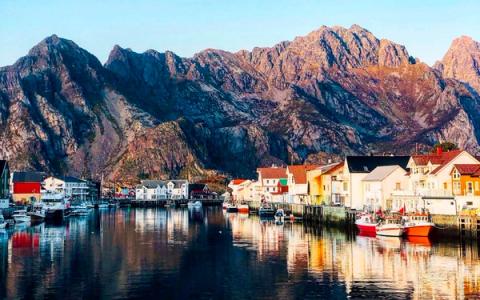
One of the most popular experiences is taking a boat trip to Trollfjorden. This beautiful narrow fjord is surrounded by steep mountains and the journey there is just as impressive as the destination itself. You can join a traditional sightseeing cruise or choose a faster RIB boat experience if you prefer something more adventurous.
If you enjoy hiking, consider climbing Fløya for panoramic views across the town and surrounding islands. The famous Svolværgeita is also located here if you’re an avid climber.
Another interesting stop is the Lofoten War Memorial Museum, which has an extensive collection of photographs, uniforms and objects from the Second World War. Lofoten played an important role during the war, and the museum offers an interesting insight into this part of Norwegian history.
You should also spend some time exploring the harbour and the small streets around the town centre. Visit the galleries, stop for a coffee and enjoy a meal overlooking the water. If you're interested in local food, Lofoten is particularly famous for its cod and stockfish, so this is a good place to try some traditional seafood dishes.
This is one of the newer and more upscale hotels in town, with a beautiful location overlooking the harbour. The hotel has modern rooms, a restaurant, fitness facilities and lovely views of the surrounding mountains and water.
Check prices and availability
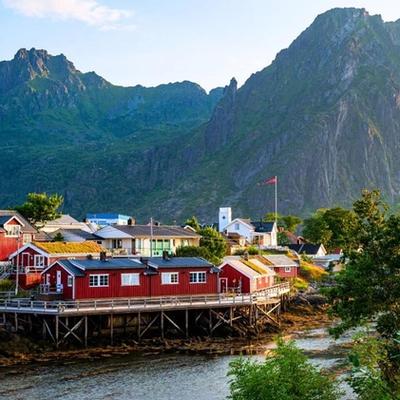
If you want to experience staying in a traditional Norwegian fishing cabin, this is one of the best options in Svolvær. Located on a small island connected to the town by a bridge, the property offers traditional red fishermen's cabins with modern facilities and beautiful waterfront surroundings.
Check prices and availability
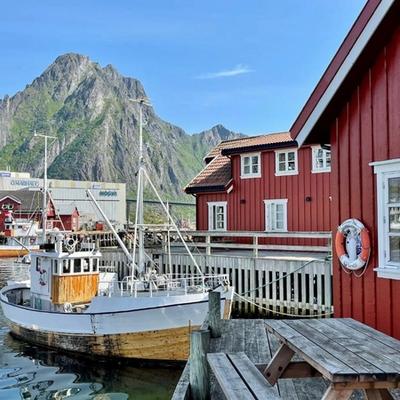
This is a great option if you'd like to stay in a traditional rorbu rather than a standard hotel room. The property is located on a small island in Svolvær harbour and offers charming fishermen's cottages with modern interiors, kitchen facilities and views of the water.
Check prices and availability
Henningsvær is one of the most charming fishing villages in Lofoten and a place I'd definitely recommend spending some time in. Built across several small islands connected by bridges, the village has a beautiful setting surrounded by the mountains and the sea.
Unlike some of the smaller villages further west, Henningsvær has a lively little centre with cafés, restaurants, art galleries and independent shops. It has become something of a creative hub in Lofoten, attracting artists, photographers, designers and travellers looking for something a little different.
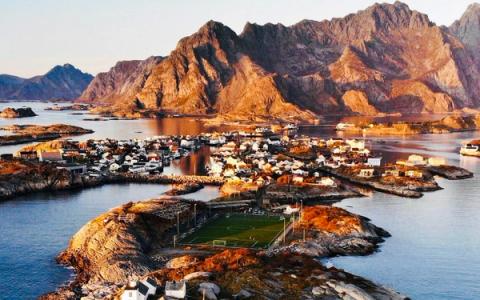
What I particularly like about Henningsvær is that you can explore almost everything on foot. Spend the morning wandering around the harbour, visit a few galleries, stop for lunch and enjoy the views from one of the waterfront cafés. It's a lovely place to slow down and experience everyday life in a traditional Norwegian fishing village.
Henningsvær is also a good base for exploring eastern and central Lofoten. It's around 25–30 minutes from Svolvær by car, and you'll have several beautiful beaches and hiking opportunities within driving distance.
I'd recommend staying here if you want a combination of beautiful scenery, good food, interesting shops and a little more atmosphere than you'll find in some of the smaller fishing villages.

I personally use SafetyWing and highly recommend it for every kind of trip. Check their prices & plans here.
One of the most photographed attractions is the Henningsvær Stadium, the famous football pitch surrounded by dramatic mountains and the sea. There are viewpoints around the village where you can admire the setting, so just walk around and have fun.
If you enjoy hiking, consider Festvågtind. This is a demanding hike with a steep ascent, but the views over Henningsvær and the surrounding islands are spectacular. It's one of the best viewpoints in this part of Lofoten, although you'll want good weather and proper hiking shoes.
I'd also recommend visiting Trevarefabrikken. This former carpentry factory has been transformed into a cultural meeting place with a hotel, restaurant, café, events and an ocean-view sauna. It's a great place to spend an afternoon or evening, even if you're not staying there.
If you want to explore the coastline, drive towards Rørvikstranda, a beautiful sandy beach not far from Henningsvær. The water might be a little too cold for most people to swim comfortably, but the scenery is absolutely worth the stop.


This is a stylish hotel right in the heart of the fishing village. The property combines traditional Norwegian architecture with modern interiors and has a beautiful waterfront setting. It's a great option if you want the comfort of a proper hotel while being within walking distance of the village's restaurants.
Check prices and availability
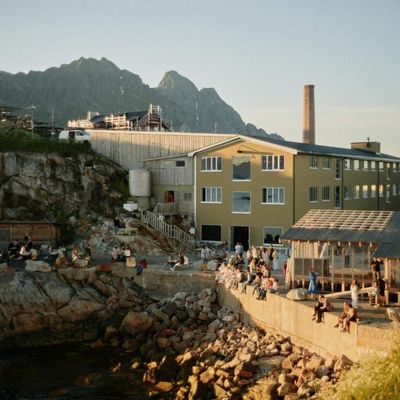
This is one of the most interesting places to stay in Lofoten, particularly if you enjoy boutique hotels with a little personality. Housed in a former carpentry factory, the property has retained many of its original industrial details while adding stylish rooms, communal spaces and a restaurant.
Check prices and availability
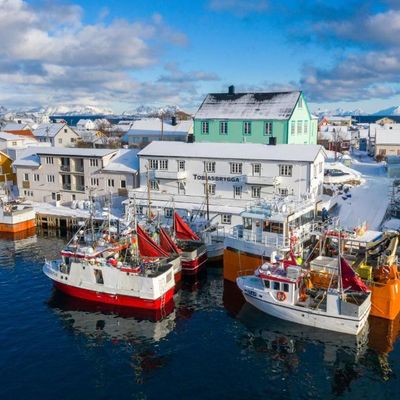
This is a traditional fishing wharf that has been converted into modern apartments. It's a particularly good option if you're travelling with friends or family and want more space than a standard hotel room. The apartments have kitchens and lovely views of the harbour.
Check prices and availability
If you want to explore as much of Lofoten as possible without constantly changing accommodation, the central part of the archipelago is a good place to look. Leknes and Ballstad are both located on Vestvågøy, roughly in the middle of Lofoten, and offer convenient access to attractions in both directions.
Leknes is the main commercial centre of the island and has supermarkets, shops, restaurants and an airport. It's not the most picturesque place in Lofoten, and I wouldn't necessarily choose it for the atmosphere alone, but it can be a very practical base if you're travelling around by car.
Ballstad, on the other hand, is a much more traditional fishing village. It's located a short drive south of Leknes and has a lovely harbour surrounded by mountains and colourful fishing cabins. There are also several waterfront accommodation options, making it a more scenic alternative if you want to stay in this part of Lofoten.
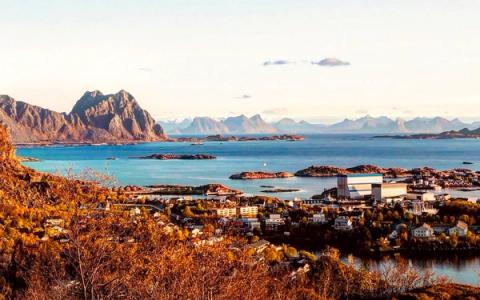
This area is particularly useful if you're planning to visit beaches such as Haukland and Uttakleiv, explore the surrounding mountains or drive towards the southern villages of Reine and Hamnøy. It's also a good option if you're travelling with a rental car and want to avoid staying too far east or west.
I'd personally choose Ballstad over Leknes if the accommodation and budget allow it. You get a much more atmospheric setting while still being conveniently located for exploring the rest of the islands.
One of the biggest attractions in this part of Lofoten is Haukland Beach. With white sand, turquoise water and dramatic mountains in the background, it's easy to understand why this is one of the most photographed beaches in Norway. Even if you don't fancy swimming in the Arctic water, it's a wonderful place for a walk or picnic.
Just around the corner is Uttakleiv Beach, another beautiful beach known for its unusual rock formations and incredible coastal scenery. It's particularly popular with photographers, especially during sunrise, sunset and the northern lights season.
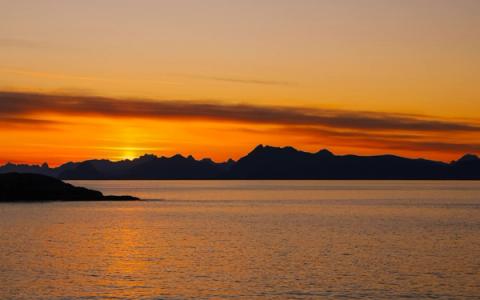
If you enjoy hiking, Offersøykammen is a fantastic viewpoint overlooking the surrounding coastline. It's a relatively short but steep hike, and the panoramic views make the effort worthwhile.
In Ballstad, take some time to explore the harbour and traditional fishing village. The area has a strong fishing heritage, and you can still see fishing boats, drying racks and working quays. It's also a good place to arrange fishing trips, kayaking and other sea-based activities.
For something more adventurous, look into hiking Skottinden. This is a challenging mountain hike with beautiful views across the islands.


Every now and again I'll send you my latest travel updates and guides.

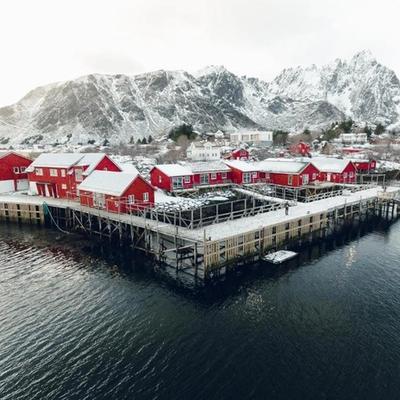
This is one of the most attractive accommodation options in Ballstad, offering beautifully designed cabins and apartments in a traditional fishing village setting. The property combines modern Scandinavian interiors with the character of old fishermen's buildings, and many units have lovely views.
Check prices and availability
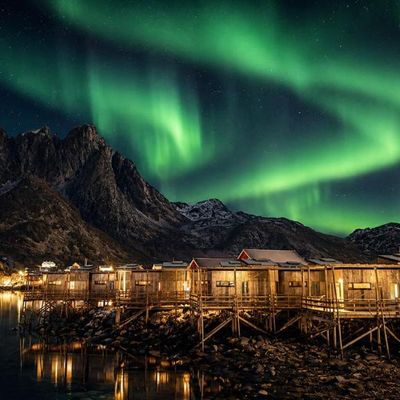
This lodge offers modern fishermen's cabins right beside the water in the active fishing village of Ballstad. The cabins combine traditional rorbu style with contemporary facilities, including kitchens and comfortable living spaces.
Check prices and availability
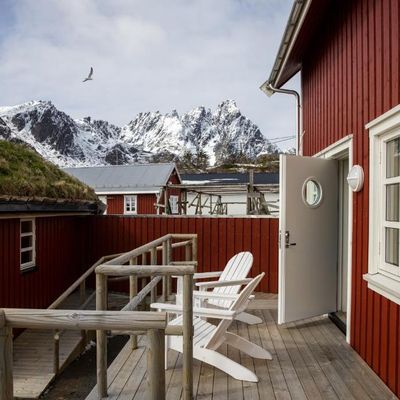
This is a lovely waterfront accommodation option in Ballstad. The property offers apartments and traditional-style fishermen's cabins, making it suitable for different types of travellers. Its location make it a great base for exploring the central part of Lofoten.
Check prices and availability
Reine, Hamnøy and Sakrisøy are among the most photographed places in Norway, so if you’ve seen a picture from Lofoten before there is a big chance they were taken here.
Located in the western part of Lofoten, these neighbouring villages are exactly what many people imagine when they think of the archipelago. The scenery is spectacular in every direction, and even driving between the small settlements feels like an attraction in itself.
Reine is the main village and has a small selection of restaurants, accommodation and facilities. Hamnøy is just a little further east and is particularly famous for its red fishermen's cabins and the iconic bridge viewpoint. Sakrisøy sits between the two and is recognisable by its distinctive yellow fishing cabins.
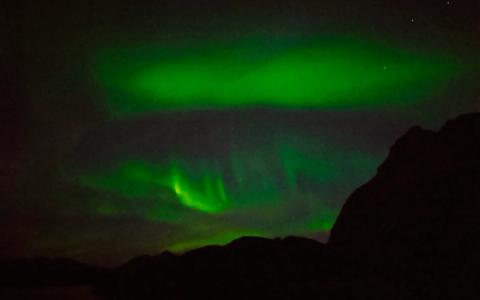
I would absolutely recommend spending at least two nights in this area if you have the time. It's not somewhere I'd simply visit for a quick photo stop, especially if you enjoy photography or hiking. Staying overnight also gives you the opportunity to experience the villages in the early morning and evening, when the day visitors have left and the atmosphere becomes much quieter.
One thing to remember is that this part of Lofoten is quite far from Svolvær and the eastern attractions. If you're planning to explore the entire archipelago, I'd combine a stay here with a few nights further north rather than using Reine as your only base.
Browse the highest-rated tours and experiences here.
The most famous activity is undoubtedly hiking Reinebringen. This is one of Norway's most iconic viewpoints, offering incredible panoramic views over Reine and the surrounding fjords. The route follows a long stone staircase built into the mountainside, and although it isn't particularly long compared with some other Lofoten hikes, the steep ascent can be challenging. It's also extremely popular, so I would recommend starting early and avoiding the hike in strong winds, poor visibility or wet conditions.
Another place worth visiting is Å i Lofoten. Located at the very end of the E10, this small fishing village is one of the best places to learn about Lofoten's fishing history. You can explore the old fishing buildings, visit the Norwegian Fishing Village Museum and enjoy the beautiful harbour surroundings.
If you enjoy kayaking, Reinefjorden is a fantastic place to explore from the water. There are guided trips that take you past small fishing villages, dramatic mountains and secluded beaches. It's a completely different way to experience the landscape, and you get a much better appreciation of how the villages are connected.
You should also stop at the famous bridge viewpoint on Hamnøy. This is one of the most recognisable photo spots in Norway, with the red fishermen's cabins Eliassen Rorbuer surrounded by mountains.

I always set up an eSIM before flying so I'm connected the moment I arrive. Compare the best plans from Airalo here.
This is probably one of the most iconic places to stay in Lofoten, and you've likely seen its red fishermen's cabins in photographs of the islands. Located on Hamnøy, the property offers traditional rorbuer with modern facilities and beautiful views of the surrounding mountains and fjord.
Check prices and availability
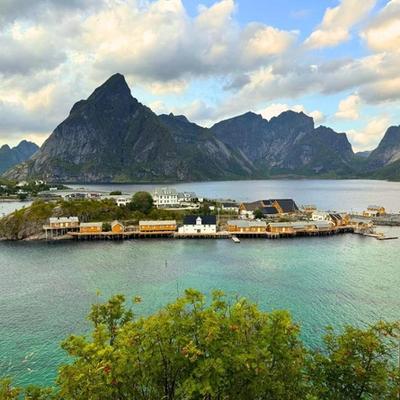
This is a lovely family-run property located on the small island of Sakrisøy, between Reine and Hamnøy. The distinctive yellow cabins are surrounded by water and mountains, creating a beautiful setting for a few nights in Lofoten. The accommodation ranges from small studios to larger cabins.
Check prices and availability
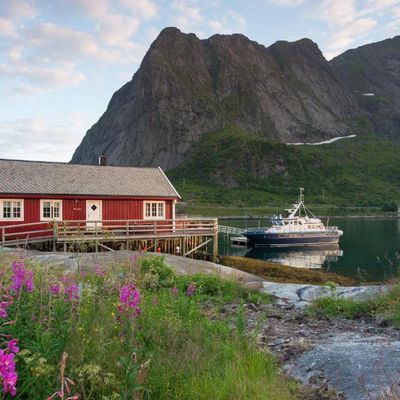
If you'd prefer an apartment rather than a traditional rorbu, this is worth considering. The property offers comfortable self-catering accommodation in the Reine area, giving you more space and flexibility during your stay. It's a good option if prefer having your own kitchen.
Check prices and availability
Find the highest rated tours and experiences here! Compare prices and book your activities in advance to get the most of your trip!
If you want to experience a quieter side of Lofoten, I would definitely look at staying around Ramberg, Fredvang or Nusfjord. This part of the archipelago is located between the central islands and Reine, and it's particularly known for its beautiful beaches, dramatic coastal scenery and hiking opportunities.
Ramberg is a small village with a beautiful location beside Rambergstranda, one of the most famous beaches in Lofoten. The village has a few shops, restaurants and accommodation options, making it a practical little base for exploring the surrounding area.
Fredvang is even smaller and has a more remote feel. It's surrounded by mountains and connected to the main road by a series of impressive bridges. This is where you'll want to stay if hiking to Kvalvika Beach and Ryten is high on your list.
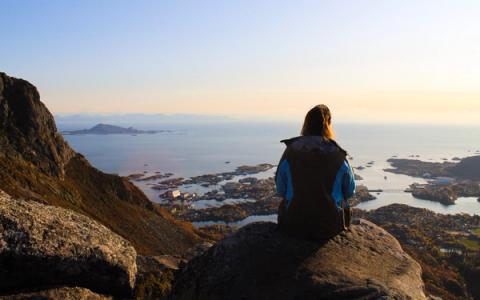
Nusfjord is something completely different. Tucked away at the end of a small road, this historic fishing village is considered one of Norway's best-preserved traditional fishing settlements. The old buildings, harbour and surrounding mountains create a very special atmosphere, and staying overnight here feels like stepping back in time.
I'd recommend this area if you enjoy beaches, hiking and smaller villages rather than having restaurants and shops right outside your door. It's also a lovely place to stay if you're travelling slowly and want to spend a few days enjoying the scenery.
One of the biggest highlights is Kvalvika Beach, a beautiful secluded beach surrounded by mountains. Reaching it requires a hike, but the scenery is well worth the effort. The white sand and turquoise water make it look more like somewhere in the tropics than the Arctic, although the water temperature is a little different!
If you're up for a more challenging hike, combine Kvalvika with Ryten. This is one of the most famous hiking routes in Lofoten, offering spectacular views over Kvalvika Beach from above. It's a popular hike, so expect to share the trail during summer, and always check the weather and trail conditions before setting out.
Another beach worth visiting is Rambergstranda. Located right beside the E10, this is one of the easiest beaches to access in Lofoten. It's a beautiful place for a walk, photography or simply enjoying the scenery.
Finally, don't miss Nusfjord. This historic fishing village is one of the most interesting cultural stops in Lofoten, with traditional fishermen's cabins, old fishing buildings and a beautiful little harbour. You can explore the village, visit the historic buildings and enjoy a meal at one of the restaurants. It's particularly lovely if you want to see a more traditional side of Norway.
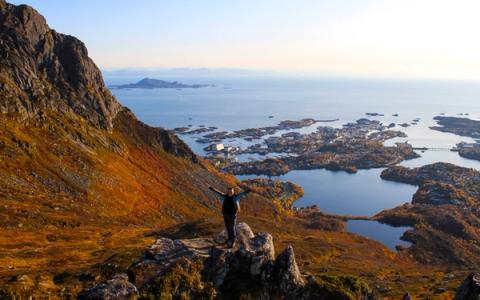
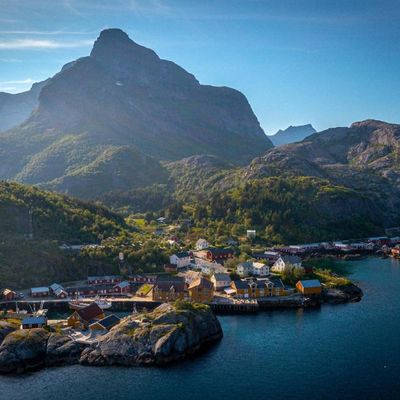
If you're looking for something special, this is one of the most memorable places to stay in Lofoten. Located in one of Norway's oldest and best-preserved fishing villages, the resort offers beautifully restored fishermen's cabins with modern interiors and plenty of historic character.
Check prices and availability
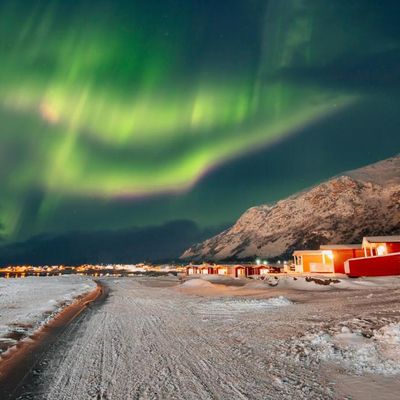
This is a convenient option if you want to stay close to the beach. The property offers different types of accommodation, including rooms, cabins, bungalows and apartments, as well as a restaurant. Its location makes it a great base for exploring Rambergstranda and various hiking trails.
Check prices and availability
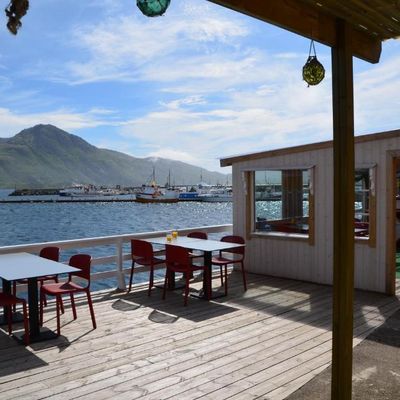
This is a lovely accommodation option in the small fishing village of Fredvang. The property offers traditional fishermen's cabins and rooms, providing a more relaxed and informal stay surrounded by nature. It's particularly well located if you're planning to hike Ryten and Kvalvika Beach.
Check prices and availability
One of the most important things to consider when planning your trip is how you're going to get around. Although the islands are connected by the E10 highway, Lofoten stretches across a fairly large area, and driving from one end to the other takes considerably longer than you might expect.
I'd strongly recommend renting a car if your budget allows it. Having your own vehicle gives you the freedom to stop at beaches, viewpoints, fishing villages and hiking trails whenever you want. Some of the best experiences in Lofoten come from simply following the road and stopping whenever you see something beautiful.
The E10 is the main road connecting the islands, running from Svolvær in the east all the way to Å in the west. It's a spectacular drive, with bridges, tunnels, fjords and mountains along the way.
If you're not renting a car, you can still visit Lofoten using public transport. There are buses connecting the main villages, including Svolvær, Henningsvær, Leknes and Reine, but departures can be limited, especially outside the summer season. You'll need to plan your days around the bus schedules, and reaching some of the beaches and hiking trailheads can be difficult without a car.
You can check connections and timetables through Entur and Reis Nordland.
Lofoten is a destination that changes dramatically throughout the year, and choosing when to visit depends on what you want to experience. There isn't necessarily one bad season, but the scenery, activities and daylight hours are very different.
Summer (June–August) is the most popular time to visit. This is when you'll experience the midnight sun, with daylight lasting almost around the clock. It's the best season for hiking, kayaking, road trips and exploring the beaches. The weather is generally milder, although you should never expect guaranteed sunshine in Northern Norway. July and August are particularly busy, so book your accommodation well in advance.
Autumn (September–October) is a wonderful time to visit if you prefer fewer visitors and beautiful autumn colours. The nights become darker, which means you have a chance of seeing the northern lights again. It's also a lovely season for photography, with changing light and sometimes dramatic weather. Some seasonal businesses start reducing their opening hours, so check before travelling.
Winter (November–March) offers a completely different experience. The mountains are covered in snow, the fishing villages look particularly atmospheric and you have the opportunity to see the northern lights. It's also a great time for activities such as snowshoeing, ski touring and northern lights photography. However, the days are very short, the weather can be unpredictable and driving conditions can be challenging.
Spring (April–May) is a quieter period when the days get longer and the snow starts melting at lower elevations. It's a lovely time to experience Lofoten without the summer crowds, although many mountain trails can still be covered in snow and some seasonal accommodation and restaurants may not yet be open.
If I had to recommend just one season for a first visit, I'd probably choose June or early September. You get plenty of daylight, good opportunities for outdoor activities and a chance to experience the islands without necessarily visiting during the busiest weeks of summer.
I'll be honest and say that Lofoten isn't a particularly cheap destination. There really is no way around it. Accommodation is one of the biggest expenses, especially if you're visiting during the summer months when demand is high.
Traditional fishermen's cabins are among the most popular places to stay, and some of the most beautiful properties can be quite expensive. However, you can also find guesthouses, hostels, campsites and apartments if you're travelling on a tighter budget.
One of my biggest recommendations is to book accommodation early, particularly if you're visiting in July or August. Lofoten has a relatively limited number of hotels and places to stay, and the most popular cabins can sell out months in advance.
I'd also consider booking accommodation with a kitchen. Eating out in Norway can be expensive, and having the option to prepare some of your own meals can make a big difference to your overall budget. There are supermarkets in places such as Svolvær, Leknes and Ramberg, so you can stock up on groceries before heading to the smaller villages.
If I were planning my next trip to Lofoten, I'd definitely split my stay between at least two different areas if I had enough time. The archipelago is simply too beautiful to rush through, and I think experiencing several different villages is part of what makes a visit here so special.
I'd probably spend a few nights around Henningsvær or Svolvær to explore the eastern part of the islands, then move further west and stay around Reine, Hamnøy or Ramberg. This would give me time to explore the famous fishing villages, visit the beaches and enjoy some of the best hiking trails without spending all my time driving.
If you only have a few nights, I'd prioritise the southern part around Reine and Hamnøy. This is where you'll find some of the most recognisable Lofoten scenery, and it's a wonderful introduction to the archipelago.
But honestly, you can't go too far wrong with any of these areas. Lofoten is one of those destinations where the journey between places is almost as beautiful as the places themselves. Give yourself time to stop, explore the little villages and enjoy the scenery rather than trying to tick off every attraction.
Hopefully this guide has given you everything you need to plan where to stay in Lofoten. To make planning the rest of your trip even easier, I've included all the resources I personally use when I travel.
Every recommendation is based on tools and services I genuinely use and would recommend to friends and family.
By using these links you help me continue to create free travel guides like this one.
Thank you for supporting Travels with Ingrid!
If you have any questions about travel in Norway, or just want to follow along as I travel the world full time, don‘t hesitate to reach out to me on social media.
I would love to connect and help out!
-Ingrid
