'%3e%3cpath%20d='M47.04%2025.9043H0.959961V37.3329H47.04V25.9043Z'%20stroke='%23987F61'%20stroke-width='2'%20stroke-linecap='round'%20stroke-linejoin='round'/%3e%3cpath%20d='M7.67988%2037.333H2.87988V43.0473H7.67988V37.333Z'%20stroke='%23987F61'%20stroke-width='2'%20stroke-linecap='round'%20stroke-linejoin='round'/%3e%3cpath%20d='M45.1203%2037.333H40.3203V43.0473H45.1203V37.333Z'%20stroke='%23987F61'%20stroke-width='2'%20stroke-linecap='round'%20stroke-linejoin='round'/%3e%3cpath%20d='M42.2399%2020.1904H5.75992C3.64792%2020.1904%201.91992%2021.9047%201.91992%2024V25.9047H46.0799V24C46.0799%2021.9047%2044.3519%2020.1904%2042.2399%2020.1904Z'%20stroke='%23987F61'%20stroke-width='2'%20stroke-linecap='round'%20stroke-linejoin='round'/%3e%3cpath%20d='M39.3598%204.95215H8.6398C6.5278%204.95215%204.7998%206.66643%204.7998%208.76167V20.1902H43.1998V8.76167C43.1998%206.66643%2041.4718%204.95215%2039.3598%204.95215Z'%20stroke='%23987F61'%20stroke-width='2'%20stroke-linecap='round'%20stroke-linejoin='round'/%3e%3cpath%20d='M18.2396%2012.5713H12.4796C10.3676%2012.5713%208.63965%2014.2856%208.63965%2016.3808V20.1903H22.0796V16.3808C22.0796%2014.2856%2020.3516%2012.5713%2018.2396%2012.5713Z'%20stroke='%23987F61'%20stroke-width='2'%20stroke-linecap='round'%20stroke-linejoin='round'/%3e%3cpath%20d='M35.5199%2012.5713H29.7599C27.6479%2012.5713%2025.9199%2014.2856%2025.9199%2016.3808V20.1903H39.3599V16.3808C39.3599%2014.2856%2037.6319%2012.5713%2035.5199%2012.5713Z'%20stroke='%23987F61'%20stroke-width='2'%20stroke-linecap='round'%20stroke-linejoin='round'/%3e%3c/g%3e%3cdefs%3e%3cclipPath%20id='clip0_42_2225'%3e%3crect%20width='48'%20height='48'%20fill='white'/%3e%3c/clipPath%3e%3c/defs%3e%3c/svg%3e)


Brazil

Instead of rushing between attractions, I spent an afternoon slowly climbing the hills above Rio in one of the city's oldest forms of transportation, crossing the iconic Arcos da Lapa, passing colorful colonial houses, street art, hidden cafés, and locals going about their day.
It felt completely different from the rest of Rio.
The Santa Teresa Tram, known locally as the Bonde de Santa Teresa, is much more than just a way to get from A to B.
It's one of Rio de Janeiro's oldest attractions, a moving piece of history, and one of the most enjoyable ways to discover one of the city's most charming neighborhoods.
If you're planning a trip to Rio, I genuinely think this should be on your itinerary.
In this guide, I'll cover everything you need to know before riding the Santa Teresa Tram, from its fascinating history and ticket prices to the best stops, practical tips, and what to see once you arrive.
Absolutely. In fact, I'd argue it's one of the most underrated experiences in Rio de Janeiro.
Many visitors only spend a few hours in Santa Teresa before moving on to the next attraction.
Personally, I think that's a mistake.
The tram ride itself is part of the experience, and the neighborhood deserves at least half a day of exploring.
If you enjoy historic transportation, local neighborhoods, street art, photography, colonial architecture, hidden cafés and just a slower travel experience in general, then you'll probably love Santa Teresa just as much as I did.


One of the things I love most about the Santa Teresa Tram is that it isn't a modern attraction built for tourists. It's been part of Rio's history for almost 150 years.
The tram first began operating in 1877, making it one of the oldest streetcar systems still running anywhere in the world.
Back then, the trams weren't electric. They were actually pulled by mules as they climbed the steep hills between downtown Rio and Santa Teresa.
In the late nineteenth century, the system was electrified, becoming one of Brazil's earliest electric tramways.
For decades, it served as the main transportation link between downtown Rio and the growing hillside neighborhood.
Today, it's impossible to imagine Santa Teresa without it.

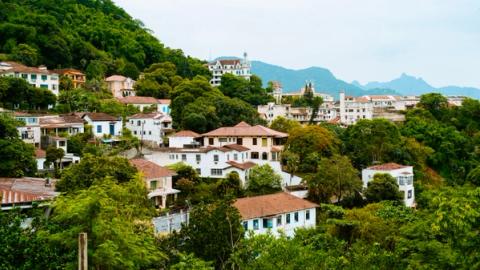
Even if you aren’t planning to ride the tram, Santa Teresa is worth visiting in its own right.
Compared to the bustling beaches of Copacabana and Ipanema, it feels calmer, greener, and more relaxed.
You'll find charming cafés tucked into old mansions, independent art galleries, beautiful viewpoints over Rio, colorful staircases, boutique shops, local restaurants serving traditional Brazilian food and quiet streets perfect for wandering.
It's also one of the best neighborhoods in Rio if you enjoy photography.
Every street seems to offer another colorful building, hidden courtyard, or panoramic view.
Many people compare it to neighborhoods like Montmartre in Paris or Alfama in Lisbon.
While every place is unique, I can definitely understand why. It has that same creative, slightly quirky atmosphere that makes you want to wander without a plan.
If you're considering a longer stay in Rio, I highly recommend setting aside a couple of nights in Santa Teresa.
It's one of the best areas to stay in Rio, especially if you're looking for really good boutique hotels with amazing views and charm.

This is one of the most exclusive hotels in Rio. Hidden on a quiet hillside surrounded by lush tropical gardens, it feels like a private estate rather than a hotel. The infinity pool is also one of the most beautiful in Rio with views over Guanabara Bay, Sugarloaf Mountain, and Christ the Redeemer.
Check prices and availability

This hotel offers some of the best views in the entire city. It's perched high on the hillside, overlooking both Sugarloaf Mountain and Christ the Redeemer, making it one of the most photogenic places to stay in Rio. It also features a rooftop terrace, infinity pool, spa, and gourmet restaurant.
Check prices and availability

If you prefer smaller, family-run accommodation, this is one of the best places to stay in Santa Teresa. This charming guesthouse is known for its warm hospitality, beautiful tropical gardens, and homemade breakfast served each morning. Despite being close to Lapa and the Selarón Steps, it feels surprisingly peaceful
Check prices and availability
The Santa Teresa Tram departs from Downtown Rio (Centro), just a short walk from Carioca Metro Station.
The Departure Station is at: Rua Lélio Gama, 2 – Centro, Rio de Janeiro
The station is easy to find on Google Maps, and you'll usually notice the queue before you even reach it.
If you're coming by Metro, simply get off at Carioca Station, leave through the appropriate exit, and walk a couple of minutes to the tram station.
If you're staying elsewhere in Rio, taking an Uber directly to the station is another easy option.
If you book an Uber just plot in Estação do Bonde de Santa Teresa or Rua Lélio Gama 2 and you'll come to the right place.
Depending on where you're staying, an Uber is usually inexpensive and drops you almost directly outside the station.
One thing to know before you arrive is that tickets are sold separately from the queue for boarding.
You'll first purchase your ticket before joining the boarding line.
The current ticket price is approximately R$20 per person (one way) and you can usually pay using both cash and card.
My advice is to try to ride the tram in the morning if possible.
Not only are the temperatures more comfortable, but the queues are usually much shorter than later in the day.
The tram is popular with both tourists and locals, particularly on weekends so arriving early gives you a much better chance of getting a seat, and enjoying the views without quite so many people around.
If mornings aren't your thing, late afternoon is another lovely time to ride, especially if you plan to stay in Santa Teresa for dinner afterward.
At the time of writing, the tram operates:
Tuesday – Sunday
8:00 AM – 5:00 PM
It does not operate on Mondays.
The tram generally leave every 20–30 minutes, although this can vary depending on demand and operational conditions.


The full journey takes around 15–20 minutes each way.
Although it's relatively short, there's plenty to see along the route.
The tram begins in the heart of downtown Rio before gradually climbing the hills into Santa Teresa.
Along the way you'll pass:
One of the things I loved most is how quickly the atmosphere changes.
Within just a few minutes, the busy streets of downtown Rio disappear behind you, replaced by peaceful hills and leafy neighborhoods.
It almost feels like you've left the city entirely.
Without question, the most famous part of the journey is crossing the Arcos da Lapa.
These magnificent white arches were originally built in the eighteenth century as an aqueduct to transport fresh water into Rio.
Today, they're one of the city's most recognizable landmarks and the Santa Teresa Tram is the only vehicle allowed to cross them.
If you're able to choose your seat, I recommend sitting on the right-hand side when traveling from Centro to Santa Teresa.
This side generally offers some of the best views as you climb into the neighborhood, particularly when crossing the Arcos da Lapa.
That said, there really isn't a bad seat.
The tram has large open windows, making it easy to enjoy the scenery no matter where you sit.

While many visitors ride all the way to Largo dos Guimarães before exploring, there are several interesting stops worth knowing about.
Curvelo is one of the best stops if you're planning to visit Parque das Ruínas.
This beautiful cultural center is built around the remains of a historic mansion and offers some fantastic panoramic views over Rio.
It's also home to exhibitions, events, and one of the city's most underrated viewpoints.
If you enjoy photography, it's well worth hopping off here.
This is the heart of Santa Teresa.
If you're only planning to stop once, I'd recommend making it here.
Around the square you'll find plenty of restaurants, bars and galleries.
The atmosphere is relaxed, creative, and full of character and I think it's the perfect place to wander without a fixed plan.
The final stop is Silvestre, located close to the entrance of Tijuca National Park.
While fewer tourists continue this far, it's a good option if you're planning to combine your tram ride with some nature or hiking.
I personally never went that far but walked up the hills around the area instead. It's beautiful, but the best spot is honestly Largo dos Guimarães.
Every now and again I'll send you my latest travel updates and guides.


Personally, I'd recommend taking the tram up to Santa Teresa and then spending a few hours exploring the neighborhood on foot.
After lunch, coffee, or a visit to some of the local galleries, you can either ride the tram back down to Centro, or better yet just walk down and see some of the amazing viewpoints along the way.
It’s an easy walk to the famous Selaron steps, so I recommend heading there on foot so you can see them from the top where there are less people.

Explore the beautiful area with a guide on this tour
Honestly, one of my favorite things to do was simply walk around without a huge plan.
Santa Teresa is full of colourful colonial houses, street art and galleries, so just pop in wherever you think looks fascinating.
If you're only visiting one attraction in Santa Teresa besides riding the tram, make it Parque das Ruínas.
This former mansion has been transformed into a cultural center while preserving much of its original structure.
The modern glass walkways contrast beautifully with the historic ruins, and from the upper levels you'll enjoy some of the best panoramic views over Rio.
Largo dos Guimarães is the heart of Santa Teresa.
This lively square is surrounded by cafés, restaurants, bars, galleries, and boutique shops.
It's the perfect place to stop for lunch or simply sit outside with a drink and watch the neighborhood go by.
If you're visiting on a weekend, there's often an even livelier atmosphere with musicians and local artists adding to the charm.

The honest answer is that Santa Teresa is generally considered one of the safer neighborhoods to visit in Rio, especially during the day.
That said, it's still a large city, and the same precautions you would take elsewhere in Rio apply here.
I personally felt comfortable exploring during the day, but like anywhere in Rio, it's always worth using common sense.
It's easy to combine with several of Rio's most popular attractions.
Just a short walk from the tram station in Lapa or on your way back down, the colourful Selarón Steps are one of Rio's most famous landmarks.
After returning from Santa Teresa, you can spend some time exploring Lapa in the evening.
The neighborhood is famous for live samba music and some of Rio’s best nightlife, so it’s a fun area to explore in the evening.


Definitely.
It's one of Rio's most unique experiences and offers a wonderful introduction to one of the city's most charming neighborhoods.
The journey takes approximately 15–20 minutes each way.
Tickets currently cost around R$20 one way, although prices can change over time.
Yes, cards are generally accepted at the ticket office.
It can be.
Weekends, holidays, and school vacations often have long queues, especially later in the morning.
Arriving early is your best chance of avoiding the biggest crowds.
Riding the Santa Teresa Tram is much more than simply taking a historic streetcar.
It's your gateway to one of Rio de Janeiro's most creative, charming, and authentic neighborhoods.
Whether you're interested in history, architecture, photography, food, or simply seeing a different side of Rio, Santa Teresa offers an experience that feels worlds away from the city's famous beaches.
Take your time, explore beyond the main square, and don't be afraid to wander.
Some of my favorite memories of Rio came from doing exactly that.
Hopefully this guide has given you everything you need to plan an unforgettable trip to Rio. To make planning even easier, I've included all the resources I personally use when I travel.
Every recommendation is based on tools and services I genuinely use and would recommend to friends and family.
By using these links you help me continue to create free travel guides like this one.
Thank you for supporting Travels with Ingrid!
If you have any questions about travel in Brazil, or just want to follow along as I travel the world full time, don‘t hesitate to reach out to me on social media.
I would love to connect and help out!
-Ingrid