


Cambodia

I remember opening Google Maps for the first time and thinking, how am I supposed to see all of this? There are hundreds of temples scattered across the area, and not all of them are worth the same amount of time.
The truth is, you don’t need to see everything to have an incredible Angkor experience. You just need to see the right temples.
Some are iconic for a reason, like the ones you’ve probably seen on Instagram, the ones that genuinely take your breath away. Others can actually feel a bit repetitive, overcrowded, or just not worth the detour unless you have a lot of extra time.
This guide is exactly what I wish I had before visiting: a clear, honest breakdown of the best temples to visit in Angkor, and the ones you can skip without huge regret.


The Angkor Archaeological Park was once the centre of the Khmer Empire, one of the most powerful civilisations in Southeast Asia. At its peak, this area held hundreds of temples, each built by different kings, in different styles, for different purposes and at different times.
That’s why every temple feels slightly different. Some are grand and symmetrical, others are crumbling and overgrown. Some are peaceful and empty and others are buzzing with energy and crowds. And that’s also why choosing the right ones matters.
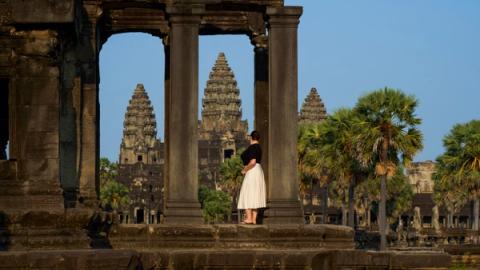
Because there are so many temples, they have made different circuits making it easier to plan your visit to the Complex. The two most popular are called the Small Circuit and the Big Circuit. Don’t make the mistake of thinking the name means that the temples are close to each other even if they are in the small circuit. This complex is massive, and even the temples here are quite widespread and it can take some time to drive between the different ones.
To make it easier for you to navigate I will also divide this article into the circuits they use and add on extra temples that don't fit into a circuit at the end. That way you’ll learn which temples in each circuit I personally think are must visits where you might want to spend more time, and which ones you can choose to skip if you think a full day of temple hopping seems a bit excessive.
In addition I've added some hidden gems that most people skip that I think works to add at the different circuits. So you can choose to either take some temples away for a more relaxing day, change up some of them so you have both the highlights and some hidden gems or just add more for a longer and more intense day.
If you also want more info on all the practical information you need before visiting, like the different day passes and how to actually plan your trip, then check out my Travel Guide to Angkor Wat.
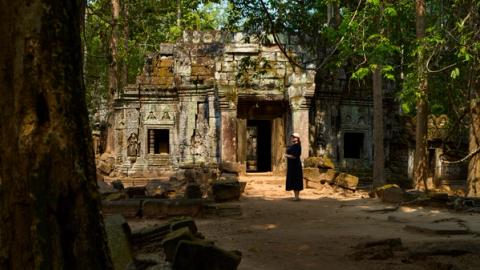
The Small Circuit is the most popular route in Angkor, and for good reason. It packs in some of the most iconic temples, all within a relatively short distance. For those who choose to just spend one day in the complex this is the most popular tour to take.
But even here, not every stop hits the same. Some will leave you speechless, while others you might walk through in 10 minutes.
Here’s exactly what to expect at each one.
Angkor Wat isn’t just the most famous temple in Cambodia, it’s one of the most iconic places in the world. And yes, it's worth the hype.
What surprised me most wasn’t just the size (it’s massive), but the details. The walls are covered in intricate carvings that tell ancient stories, and the symmetry of the entire complex is incredibly fascinating. That said, it’s also the busiest temple in Angkor. Sunrise here is beautiful, but expect crowds.
I came back here on three different occasions and still feel like I could’ve seen more. If you want fewer crowds I recommend coming around 4pm when most people are elsewhere or back home, and the sun is starting to set, giving the temple that special glow.
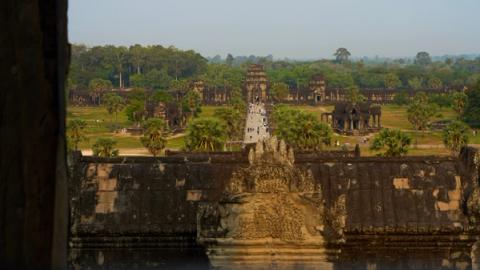
Also make sure to walk to the top of the stairs in the middle of the temple for an unbelievable view of the temple and area around.
'%3e%3cpath%20d='M47.04%2025.9043H0.959961V37.3329H47.04V25.9043Z'%20stroke='%23987F61'%20stroke-width='2'%20stroke-linecap='round'%20stroke-linejoin='round'/%3e%3cpath%20d='M7.67988%2037.333H2.87988V43.0473H7.67988V37.333Z'%20stroke='%23987F61'%20stroke-width='2'%20stroke-linecap='round'%20stroke-linejoin='round'/%3e%3cpath%20d='M45.1203%2037.333H40.3203V43.0473H45.1203V37.333Z'%20stroke='%23987F61'%20stroke-width='2'%20stroke-linecap='round'%20stroke-linejoin='round'/%3e%3cpath%20d='M42.2399%2020.1904H5.75992C3.64792%2020.1904%201.91992%2021.9047%201.91992%2024V25.9047H46.0799V24C46.0799%2021.9047%2044.3519%2020.1904%2042.2399%2020.1904Z'%20stroke='%23987F61'%20stroke-width='2'%20stroke-linecap='round'%20stroke-linejoin='round'/%3e%3cpath%20d='M39.3598%204.95215H8.6398C6.5278%204.95215%204.7998%206.66643%204.7998%208.76167V20.1902H43.1998V8.76167C43.1998%206.66643%2041.4718%204.95215%2039.3598%204.95215Z'%20stroke='%23987F61'%20stroke-width='2'%20stroke-linecap='round'%20stroke-linejoin='round'/%3e%3cpath%20d='M18.2396%2012.5713H12.4796C10.3676%2012.5713%208.63965%2014.2856%208.63965%2016.3808V20.1903H22.0796V16.3808C22.0796%2014.2856%2020.3516%2012.5713%2018.2396%2012.5713Z'%20stroke='%23987F61'%20stroke-width='2'%20stroke-linecap='round'%20stroke-linejoin='round'/%3e%3cpath%20d='M35.5199%2012.5713H29.7599C27.6479%2012.5713%2025.9199%2014.2856%2025.9199%2016.3808V20.1903H39.3599V16.3808C39.3599%2014.2856%2037.6319%2012.5713%2035.5199%2012.5713Z'%20stroke='%23987F61'%20stroke-width='2'%20stroke-linecap='round'%20stroke-linejoin='round'/%3e%3c/g%3e%3cdefs%3e%3cclipPath%20id='clip0_42_2225'%3e%3crect%20width='48'%20height='48'%20fill='white'/%3e%3c/clipPath%3e%3c/defs%3e%3c/svg%3e)
Find all the best Hotel deals here
This one completely caught me off guard in the best way possible. You walk in, and suddenly you’re surrounded by dozens of giant stone faces, all with that same calm, slightly smiling expression. No matter where you stand, it feels like they’re looking at you.
This was one of my favourite temples in Angkor because it feels so different from Angkor Wat, it’s more mysterious, more atmospheric, and honestly a bit eerie in the best way.
This one is currently undergoing some reconstruction so there might be some work being done, but it’s said to be done within a year or two, so around 2028.


I personally use SafetyWing and highly recommend it for every kind of trip. Check their prices & plans here.
This is technically an entrance, but it feels like a full experience in itself. The gate has a massive stone face that line the bridge, staring down as you pass, and the whole setting feels dramatic and almost cinematic.
It’s not a place you need to spend much time, but I absolutely think it's worth a stop before you drive through. Not all drivers stop here, so make sure to let them know you want to stop in advance.

If you’ve ever seen photos of trees growing through temple ruins, this is the place.
At Ta Prohm it feels like nature has completely taken over. Massive roots wrap around walls, doorways collapse into the jungle, and it feels almost untouched. This temple was also made famous for being used in the Tomb raider movie with Angelina Jolie.
It feels wild, slightly overgrown, and completely different from the more “restored” temples. Walking through it, you get a sense of what Angkor might have looked like when it was first rediscovered. The fact that it’s so different also makes it very popular, and they even have various spots for people to take pictures, so there are often lines to get the famous shots with the trees in it. However crowded it may be this is not one to be missed.
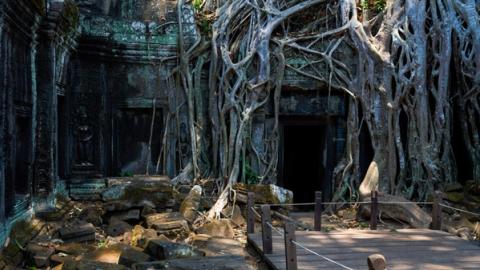
This one is often skipped and even though I liked it I can see why. After visiting a couple of truly wow-factor temples this doesn’t really compare to the others. However, since many people skip this one, you’ll have less people to fight for space with.
If you feel like you have more temple-hopping left in you it’s a quieter, more peaceful, and great place to slow down for a bit. However, if you're very tired during the small circuit, this is the one I would skip.

Every now and again I'll send you my latest travel updates and guides.

Even though it’s a set circuit I still learned that different drivers stop at different spots in addition to this, and some don’t. So if you’re not prepared you will get what they either think are the best ones or what some other people have asked for. You might also not get any more, it depends a bit from driver to driver and how long you spend at each temple. So it’s good to have thought about it before you go and agree with your driver which temples you want to visit.
Below are a couple I would add to the small circuit. They’re both pretty small so you don’t need much time here, but I think they're really stunning and since almost nobody adds them, there were no people here when I visited. They’re also just across the street from each other so it’s easy to add both.
Chau Say Tevoda is one of those temples that doesn’t immediately scream for your attention, but once you step inside, it quietly wins you over.
What stood out to me here were the details. The temple is relatively small, but the carvings are incredibly well preserved with delicate apsaras and intricate floral patterns.
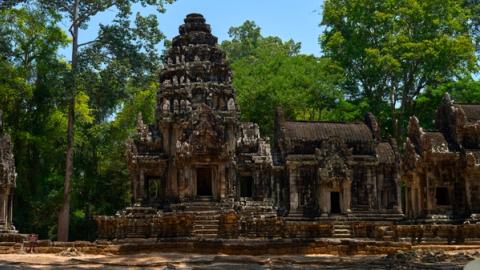
Directly across the road from Chau Say Tevoda, Thommanon feels like its slightly more polished twin.
At first glance, the two temples look very similar, and historically they were built around the same time. But Thommanon is in slightly better condition, which makes it easier to appreciate the structure as a whole.
What I loved here was how complete it feels. The central tower still stands strong, the proportions are balanced, and the carvings are some of the most elegant in Angkor.
And again, because most people stop for a quick photo (or skip it entirely), you often get moments where it’s empty. I remember standing there thinking how strange it was that such a beautiful place could feel so overlooked.


If the Small Circuit is about ticking off the icons, the Big Circuit is where you slow down and explore a different side of Angkor.
It’s quieter, more spread out, and (in my opinion) way more enjoyable after your first temple day. But again, not every stop is a must-see. Here’s what each one is really like.
Preah Khan is big. Like, get a little lost inside big. Long corridors, crumbling doorways, hidden courtyards that make it feel endless in the best way.
What I loved most is that it still feels slightly untouched. Not as polished as Angkor Wat, not as crowded as Ta Prohm, but just as atmospheric. If I had to pick one temple that felt the most special along the Big Circuit, it would be this one.


I always set up an eSIM before flying so I'm connected the moment I arrive. Compare the best plans from Airalo here.
This is one of the more unique stops on the Big Circuit because this one feels completely different from the rest. You reach it via a long wooden walkway over water, which already makes it feel different from the other temples.
The temple itself sits on a small island in the middle of a reservoir, and it’s much smaller and simpler, but there’s something peaceful about it. It’s not a “wow” temple, but it’s a nice change of pace.
When you’ve crossed the bridge you'll see that you can either walk directly to the temple or take a detour to something called the ancient dike. We decided to do the detour, but it was honestly pretty disappointing so no need to do that in my opinion.

This is one of those places that quietly surprises you. At first, it seems like just another small temple, but then you reach the eastern gate, where a massive tree has wrapped itself completely around the stone doorway.
It’s very similar to Ta Prohm, just much smaller and without the crowds. If you're looking for some really cool photos, this is a great spot to get them
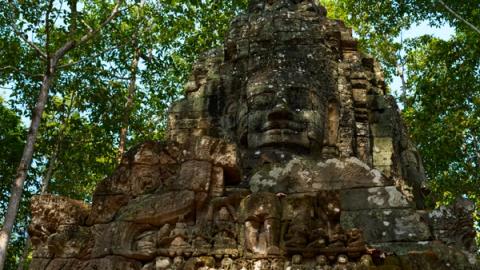
East Mebon and Pre Rup are quite similar in my opinion, so if you feel like you're tired from seeing temples by now, you can choose to skip this one.
However, I do think it's a pretty one, it's just very similar to the next and even bigger one on this circuit. The thing that separates this one from many of the other temples is the many elephant statues used to decorate the outsides of the temple.
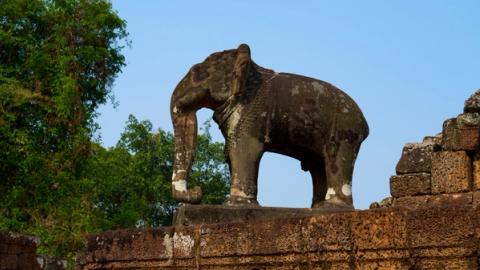
This is the sunset temple on the Big Circuit. I visited this temple in the morning which was very nice, but if I could do it again I would choose to end my trip here and watch the sunset from the temple. I didn't see it, but I’ve heard it’s supposed to be magical.
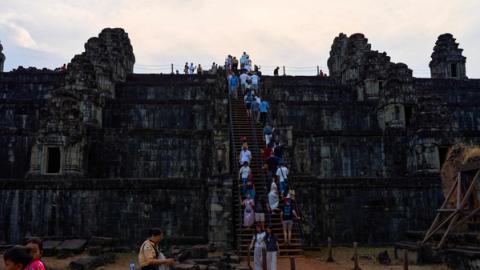
It’s another pyramid-style temple, so you can climb to the top and get some really great views over the surrounding landscape.
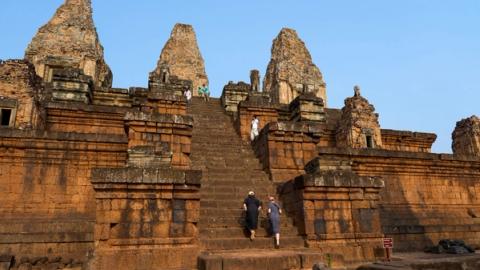
This one requires a small detour, and that’s exactly why it’s so quiet. If you’ve read my Travel Guide to Angkor Wat you’ve seen that this is often added as part of what's called Circuit 4. However, I don’t think that circuit makes much sense and would rather choose to add Banteay Samré as an extra temple to the Big Circuit if you feel like you have the time and energy for it. Just talk to your driver about it first, because it may cost a bit extra as it's out of the way.
Banteay Samré is incredibly well preserved, with detailed carvings and a layout that feels a bit like a mini Angkor Wat. It doesn’t have the dramatic trees of Ta Prohm or the faces of Bayon, but it’s still worth a visit in my book.
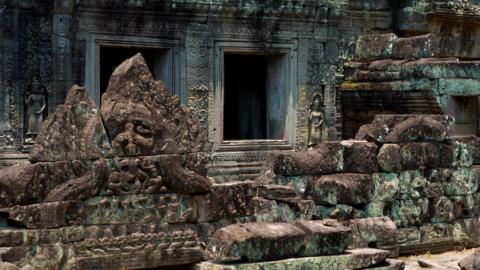
This group of temples are often put together in what’s called Circuit 3. They’re located about 30 minutes from Siem Reap, but in the opposite direction from the other temples, making it hard to combine with the others. Therefore many skip these, which I think is a huge mistake.
These temples are some of the earliest structures of the Angkor Empire, dating back to the 9th century. And you can feel it, they’re simpler, quieter, and far less visited in Siem Reap.
There are three temples in this group, not all of them a complete wow-experience, but for me just visiting the Bakong temple was wow enough to make it worth coming here.
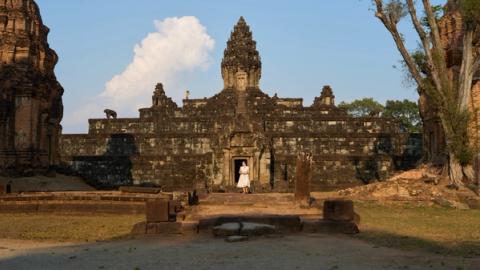
This is the highlight of the Roluos Group, and the one that makes the trip worth it. This one actually ended up being one of my favourite temples of all the ones I visited.
Bakong is a massive pyramid-style temple, often considered one of the first true “temple mountains” in Khmer architecture. It’s symmetrical, powerful, and surrounded by a wide moat that adds to the sense of scale.
Climbing up feels different from other temples, it’s less crowded, less rushed, and you can actually take your time at the top without feeling like you’re in someone’s photo.
You can explore it from different sides so that no matter what time of day you're here you will have good lighting. Just the pathway leading up to the temple was impressing to me.

Browse the highest-rated tours and experiences here.
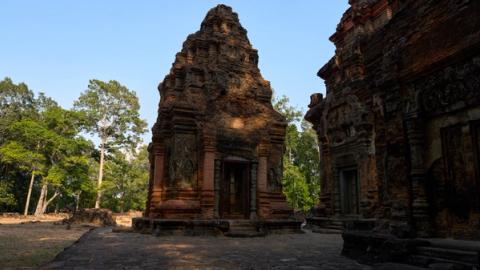
This is usually the first stop, and at first glance, it might not seem like much. Six brick towers standing in a row, relatively small compared to what you’ve already seen… but when you get closer, the details start to stand out. The carvings on the brick, the symmetry, the way everything lines up, it’s simple, but elegant.
I remember almost rushing through this one, and then slowing down and just enjoying it instead.
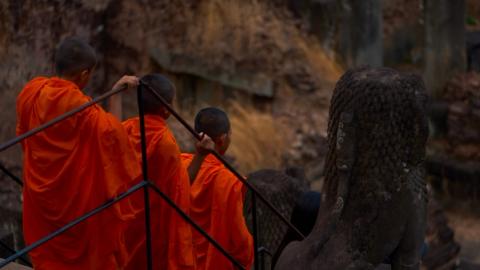
Lolei is the quietest of the three, and the one most people barely spend time at. It’s honestly one of the least impressive ones, but the setting makes it interesting.
It’s located within an active monastery, which gives it a completely different feel. You’ll likely see monks, local life, and a much more lived-in atmosphere compared to the main Angkor temples.
You don’t have to spend much time here, but if you’re already in the area, it’s worth a stop.
If you have extra time in Siem Reap, these are absolutely worth visiitng.
This is the one temple that’s not on the main circuits, but absolutely should be on your itinerary.
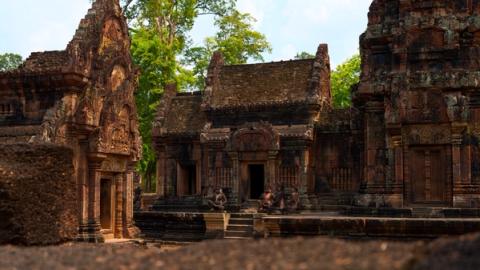
About 40 minutes from the main Angkor complex, Banteay Srei feels completely different from everything else you’ve seen. The stone is pinkish-red, the carvings are unbelievably detailed, and the whole place feels more delicate than the massive temples closer to Siem Reap. You can choose to add this to a longer day trip also visiting Kulen Mountain for instance.
Find the highest rated tours and experiences here! Compare prices and book your activities in advance to get the most of your trip!
This one feels like a real adventure. Beng Mealea is further out (about 1–1.5 hours from Siem Reap), but it’s completely different from the restored temples inside Angkor.
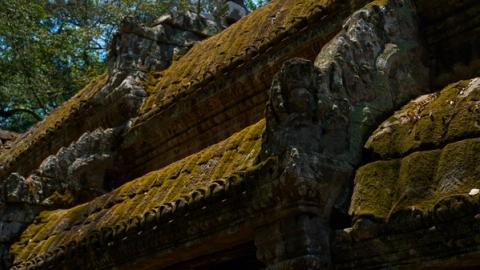
Here, everything is partially collapsed, overgrown, and a little chaotic in the best way. You’ll climb over stones, walk through broken corridors, and feel like you’re exploring something that hasn’t been fully uncovered yet. It reminded me of Ta Prohm… but wilder and less controlled.
This one is actually quite popular, but I’m including it because most people only come here for sunset. You climb up a hill, and from the top you can see Angkor Wat in the distance, surrounded by jungle, which is a pretty cool sight.
But here’s the catch, it gets pretty crowded at sunset, and honestly I didn’t find the sunset that spectacular. However I still think the temple is quite nice, and you get that amazing view of Angkor Wat which you can't get anywhere else.
Here is a quick overview of the best neighbourhoods to consider when deciding where to stay in Siem Reap.
Siem Reap is relatively compact, so you don't necessarily need to stay right beside every attraction. Tuk-tuks make it easy to get around, and most visitors will arrange transport to Angkor Archaeological Park regardless of where their hotel is located. I would choose your area based on how you want your evenings to feel rather than simply looking for the hotel closest to the temples.
Below you’ll see my three favourite hotels that I recommend checking out first. This is my personal favourite, and I highly recommend staying there if you want a relaxing stay in Siem Reap.
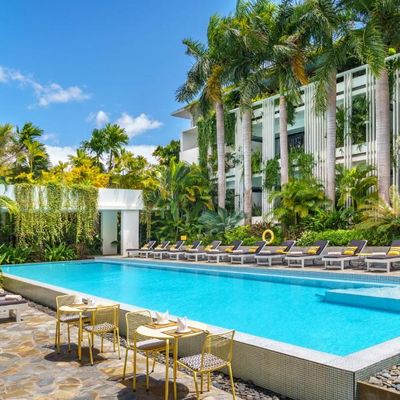
This is the definition of boutique perfection with mid-century design, tropical landscaping and an iconic pool. It feels stylish without trying too hard and somehow every detail just works.
Check prices and availability
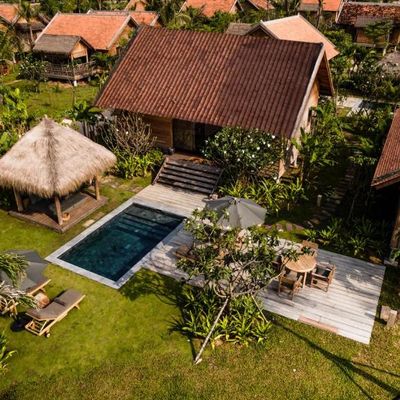
This hotel offers a different kind of luxury stay, with traditional Khmer-inspired villas set among rice paddies and lush tropical gardens. The property feels more like a peaceful countryside retreat than a conventional city hotel, with a beautiful pool, spa and plenty of space to slow down.
Check prices and availability
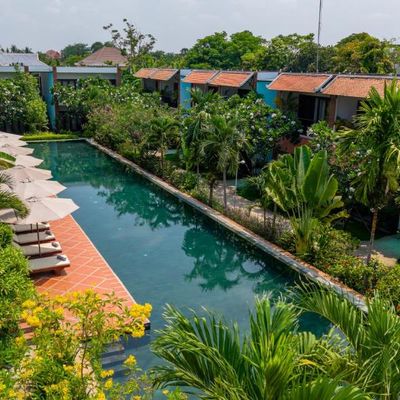
This is a great option if you want a tropical atmosphere without paying luxury-resort prices. The property has swimming pools, spacious rooms and traditional Khmer-inspired details, creating a relaxed setting away from the busiest parts of town.
Check prices and availability
Below you'll find a map where I've pinned my favourite hotels in Siem Reap to make it easier for you to navigate when you're looking for where you want to base yourself.
Angkor Wat is one of those places that really does live up to the hype, but only if you experience it the right way. You don’t need to rush. You don’t need to check off every single temple. And you definitely don’t need to follow the exact same route as everyone else.
Pick a few standout temples. Go early (at least once). Take breaks in between. And leave space to just be there instead of constantly moving on to the next stop.
Plan smart, slow down, and Angkor will feel just as magical as you imagined, if not more.
Hopefully this guide has given you everything you need to plan which temples to visit in Siem Reap. To make planning the rest of your trip even easier, I've included all the resources I personally use when I travel.
Every recommendation is based on tools and services I genuinely use and would recommend to friends and family.
By using these links you help me continue to create free travel guides like this one.
Thank you for supporting Travels with Ingrid!
If you have any questions about travel in Cambodia, or just want to follow along as I travel the world full time, don‘t hesitate to reach out to me on social media.
I would love to connect and help out!
-Ingrid


