Thailand

But once you understand how Bangkok transportation works, getting around the city is actually pretty easy. I’ve spent enough time travelling around Bangkok to learn that the trick isn't finding one perfect way to get around. Instead, you need to know which type of transport works best for the journey you're making.
For longer journeys across the city, I usually look at the BTS Skytrain or MRT first. If I'm heading towards the Old Town or somewhere along the Chao Phraya River, the boats can be fantastic. For places that aren't close to public transport, I'll use Grab or a taxi. And sometimes, especially for a short journey, walking is genuinely the easiest option.
The biggest thing to remember? Don't underestimate Bangkok traffic. A journey that looks short on the map can take forever during rush hour. Knowing when to use the trains instead of a car can save you a surprising amount of time.
So, if you're wondering how to get around Bangkok, whether Bangkok has good public transportation, how much transport costs, or which Bangkok transportation option is best for tourists, here's everything you need to know.
There are plenty of ways to get around Bangkok, including:
For most visitors, you probably won't use all of them. The BTS and MRT are the most useful for getting around central Bangkok, particularly if you're staying around Sukhumvit, Siam, Silom, Asok, Phrom Phong, Thonglor or areas connected to the rail network.
For Bangkok's Old Town, temples and riverside attractions, boats and taxis become much more useful.
And then there are the journeys where you simply need to get from your hotel to somewhere that isn't conveniently connected to public transport. That's where Grab, taxis and motorbike taxis come in.
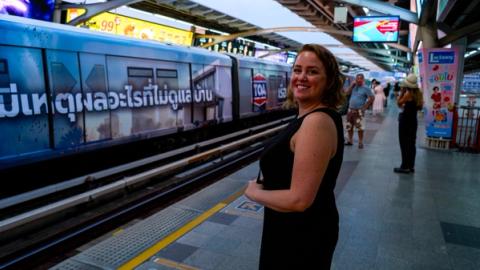
Yes, but it can take a little getting used to. Bangkok is a huge city, and its different neighbourhoods aren't all connected in the same way. You can be staying somewhere that looks close to an attraction on a map, only to discover that there's no convenient train station nearby. That’s why I always recommend checking if there is a station close to your hotel before booking.
The good news is that Bangkok has a very useful combination of BTS Skytrain, MRT, boats and taxis, meaning you can usually find a way around without having to rely entirely on cars.
The main mistake I see people make is looking only at the distance between two places. In Bangkok, distance isn't always the best indication of travel time. A few kilometres by car can take much longer than expected when traffic is bad, while a BTS or MRT journey can get you across the city relatively quickly without worrying about what's happening on the roads. This is why I generally check public transport before automatically ordering a car.

Browse the highest-rated tours and experiences here.
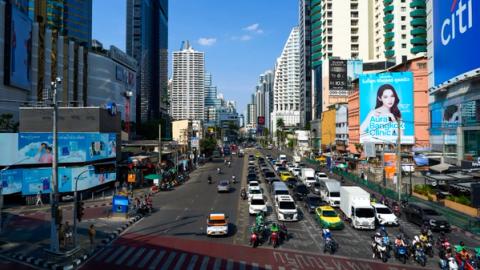
The BTS Skytrain, also called the Bangkok Mass Transit System, is one of the easiest ways to get around Bangkok. The trains run on elevated tracks above the streets, meaning they're completely unaffected by the traffic below. This is a huge advantage in Bangkok.
The BTS is particularly useful for getting around areas such as Siam, Chit Lom, Phrom Phong, Thonglor, Ekkamai, Asok and Silom, depending on the line and station.
If you're staying somewhere near a BTS station, you've already made getting around Bangkok considerably easier.
The biggest advantage is that you can look at a road packed with cars and buses underneath you while you're comfortably moving above it.
It's fast, air-conditioned, easy to understand, relatively inexpensive, not affected by road traffic and well connected to major shopping and tourist areas. For many trips around central Bangkok, this is my first choice.
You can buy single-journey tickets from the machines or ticket counters at BTS stations. If you have coins and small bills on you, there are plenty of kiosk at each station that are easy to understand. Just enter the station you want to go to and it will tell you what to pay. If you don’t have enough cash, there is also an information desk at each station where you can buy your tickets from a person. This is also very helpful if you don’t quite know how to do it. Just don’t expect all of them to speak english, so if you have any questions it’s nice to bring out the translation app.
You can also get a Rabbit Card, which is Bangkok's BTS stored-value card. They currently cost 120-baht to get and you fill them up when needed. For a short holiday, I don't think you necessarily need to get a Rabbit Card. If you're only taking a few BTS journeys, buying individual tickets is simple enough.
One important thing to remember is that BTS and MRT are separate systems, so changing from one to the other can mean dealing with a separate ticketing system.
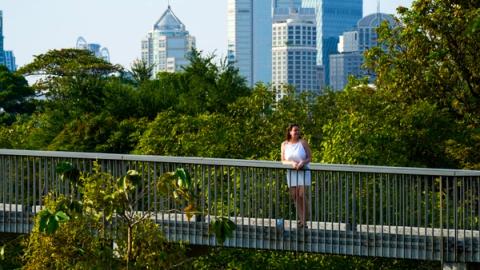
The MRT Bangkok is the city's underground metro system and is another extremely useful way to get around. One of the reasons I like the MRT for tourists is that it connects some areas that aren't as convenient on the BTS.
The MRT Blue Line is particularly useful for getting to places including:
Sanam Chai MRT Station is especially useful if you're visiting attractions around Bangkok's historic centre, including Wat Pho and the Grand Palace area.
The MRT is air-conditioned, easy to navigate and, just like the BTS, completely avoids Bangkok's road traffic.
Yes. This is one of the useful changes for visitors. In June 2026 you could start using contactless payment on the MRTA, allowing passengers to use compatible contactless Visa, Mastercard and UnionPay cards. That means you may be able to simply tap a compatible bank card rather than worrying about buying a traditional ticket.
I tried this on my most recent trip to Bangkok and it was super smooth and easy. However, I would still carry another payment option because payment systems can change and not every transport network in Bangkok works in exactly the same way.
This is something that confuses a lot of first-time visitors. The BTS and MRT are different rail systems, although they connect at several important places.
You don't necessarily need to understand the technical differences. The easiest thing is simply to open Google Maps and see which system gets you closest to where you're going. The two systems together make getting around Bangkok much easier than it first appears.
As a rough guide:
Use the BTS for:
Siam, Chit Lom, Phrom Phong, Thonglor, Ekkamai, Asok and much of Sukhumvit.
Use the MRT for:
Chinatown, Sanam Chai, Hua Lamphong, Chatuchak, Silom and areas along the Blue Line.

I always set up an eSIM before flying so I'm connected the moment I arrive. Compare the best plans from Airalo here.
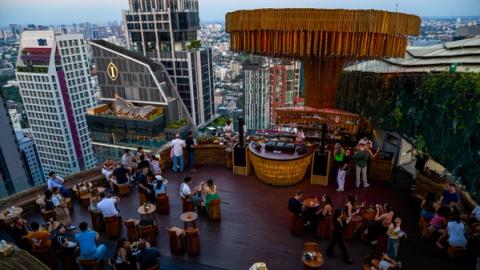
You have several options when landing in Bangkok, all of them fairly easy to navigate.
If you're flying into Suvarnabhumi Airport (BKK) and your hotel is close to a BTS or MRT connection, the Airport Rail Link can be a very convenient option.
The Airport Rail Link station is at Level B1 of Suvarnabhumi Airport and currently operates from approximately 05:30 until midnight.
It connects the airport with central Bangkok, including Makkasan and Phaya Thai, where you can connect with the MRT and BTS respectively.
If you're travelling alone or as a couple and don't have huge amounts of luggage, this can be a great way to get into the city. However, I wouldn't automatically take the train just because it's cheaper. If you've got two enormous suitcases, you're exhausted after a long-haul flight and your hotel is nowhere near a station, paying for a taxi or Grab can be worth it.
Official airport taxis are available 24 hours a day. At Suvarnabhumi, the taxi service is on Level 1, between Gates 4 and 7, and passengers use the airport's taxi queue system. There is a 50-baht airport surcharge that will be added to every fare as well as expressway tolls.
Grab is also available from Suvarnabhumi, and the designated pick-up area is at Level 1, Gate 4. This might change, but you’ll get the updated info once you open your Grab app to book a car.
If you're flying into Don Mueang Airport (DMK), you have a few different options.
Don Mueang is connected to Bangkok by the SRT Red Line, as well as buses, taxis and Grab. There are also airport buses serving areas including Chatuchak, Victory Monument, Pratunam and Khao San Road.
Again, the best option depends on where you're staying. If your hotel is conveniently connected to the Red Line, train travel can make sense. If you're staying somewhere without an easy connection, a Grab or taxi can be much simpler.

Then I recommend this private pickup that meets you at the airport and drops you of at your hotel, all costs included.
Let's just say Bangkok has earned its reputation when it comes to traffic. Some times it’s decent, but sometimes it can be terrible.
And what makes it particularly frustrating for tourists is that the distance between two places doesn't tell you how long the journey will take. A journey that should theoretically take 20 minutes can turn into 45 minutes or more when traffic is heavy.
This is especially important if you're trying to fit several things into one day. I've learned not to plan a Bangkok itinerary based purely on Google Maps' walking or driving distances. I look at how the places connect by BTS, MRT or boat. That's often much more useful.
The busiest periods are generally around the morning and evening commuter peaks. I'd be particularly careful about relying on taxis or Grab during approximately 7:00–9:00 AM and 5:00–7:00 PM. The times I’ve booked a Grab during those hours, I’ve always regretted it later. So learn from me and either go earlier, wait or take the public transport.
Traffic can also become unpredictable when it rains. So if you have somewhere important to be at a particular time, such as an airport, train station or booked tour, I would always leave extra time.
'%3e%3cpath%20d='M47.04%2025.9043H0.959961V37.3329H47.04V25.9043Z'%20stroke='%23987F61'%20stroke-width='2'%20stroke-linecap='round'%20stroke-linejoin='round'/%3e%3cpath%20d='M7.67988%2037.333H2.87988V43.0473H7.67988V37.333Z'%20stroke='%23987F61'%20stroke-width='2'%20stroke-linecap='round'%20stroke-linejoin='round'/%3e%3cpath%20d='M45.1203%2037.333H40.3203V43.0473H45.1203V37.333Z'%20stroke='%23987F61'%20stroke-width='2'%20stroke-linecap='round'%20stroke-linejoin='round'/%3e%3cpath%20d='M42.2399%2020.1904H5.75992C3.64792%2020.1904%201.91992%2021.9047%201.91992%2024V25.9047H46.0799V24C46.0799%2021.9047%2044.3519%2020.1904%2042.2399%2020.1904Z'%20stroke='%23987F61'%20stroke-width='2'%20stroke-linecap='round'%20stroke-linejoin='round'/%3e%3cpath%20d='M39.3598%204.95215H8.6398C6.5278%204.95215%204.7998%206.66643%204.7998%208.76167V20.1902H43.1998V8.76167C43.1998%206.66643%2041.4718%204.95215%2039.3598%204.95215Z'%20stroke='%23987F61'%20stroke-width='2'%20stroke-linecap='round'%20stroke-linejoin='round'/%3e%3cpath%20d='M18.2396%2012.5713H12.4796C10.3676%2012.5713%208.63965%2014.2856%208.63965%2016.3808V20.1903H22.0796V16.3808C22.0796%2014.2856%2020.3516%2012.5713%2018.2396%2012.5713Z'%20stroke='%23987F61'%20stroke-width='2'%20stroke-linecap='round'%20stroke-linejoin='round'/%3e%3cpath%20d='M35.5199%2012.5713H29.7599C27.6479%2012.5713%2025.9199%2014.2856%2025.9199%2016.3808V20.1903H39.3599V16.3808C39.3599%2014.2856%2037.6319%2012.5713%2035.5199%2012.5713Z'%20stroke='%23987F61'%20stroke-width='2'%20stroke-linecap='round'%20stroke-linejoin='round'/%3e%3c/g%3e%3cdefs%3e%3cclipPath%20id='clip0_42_2225'%3e%3crect%20width='48'%20height='48'%20fill='white'/%3e%3c/clipPath%3e%3c/defs%3e%3c/svg%3e)
Browse the best hotels, guesthouses, and boutique stays on Hotels.com here.
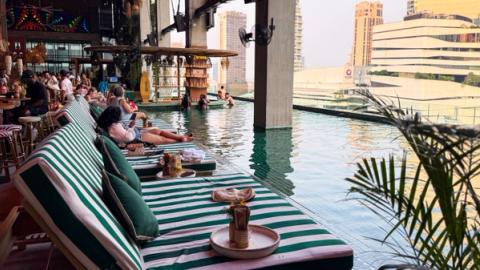
Of course you should take a tuk-tuk at least once in Bangkok. It's part of the experience. There's something about sitting in the back of a tuk-tuk with Bangkok buzzing around you that feels very different from sitting inside an air-conditioned Grab.
But I wouldn't use tuk-tuks as my main form of transport. They're still on the road, which means they're still affected by traffic, and prices are usually negotiated rather than metered. So always agree on the price before getting in, and don't feel like you have to accept the first price you're given.
I think a tuk-tuk ride is one of those things that makes sense as part of your Bangkok experience rather than something you need to use every time you go somewhere.
Every now and again I'll send you my latest travel updates and guides.

You'll see drivers wearing coloured or numbered vests around Bangkok, particularly near BTS stations and the entrances to smaller streets, known as sois. These are motorbike taxis.
They are incredibly useful for short journeys, particularly when you're trying to get down a congested side street. And because they can weave through traffic, they can sometimes be much faster than a car.
They're especially useful for the last kilometre or two between a BTS/MRT station and your hotel. However, this is not something I'd recommend if you're uncomfortable on a motorbike. Bangkok traffic is busy, and there is considerably less protection than sitting in a car. If you do use one, wear a helmet and make sure you're comfortable with the journey.
Yes, and you absolutely should. One of my favourite things about Bangkok transportation is that the Chao Phraya River is essentially another highway through the city.
Instead of sitting in traffic, you can travel along the river while passing temples, hotels, markets and skyscrapers. The Chao Phraya Express Boat is particularly useful for visiting riverside attractions.
You can use boats to get close to places such as:
The exact routes and fares depend on the service, so check the current information before travelling.
Bangkok also has canal boats operating along Khlong Saen Saep. This is one of those forms of Bangkok public transportation that tourists often overlook.
The canal runs through parts of central Bangkok and can be useful for getting between areas around Pratunam and other parts of the city. It's fast because, once again, you're avoiding the traffic. But I wouldn't necessarily recommend making this your first Bangkok transportation experience.
The boats can be busy, boarding can be quick and the whole experience feels much more local than taking the BTS. If you're adventurous, though, it's a fun way to see another side of Bangkok.
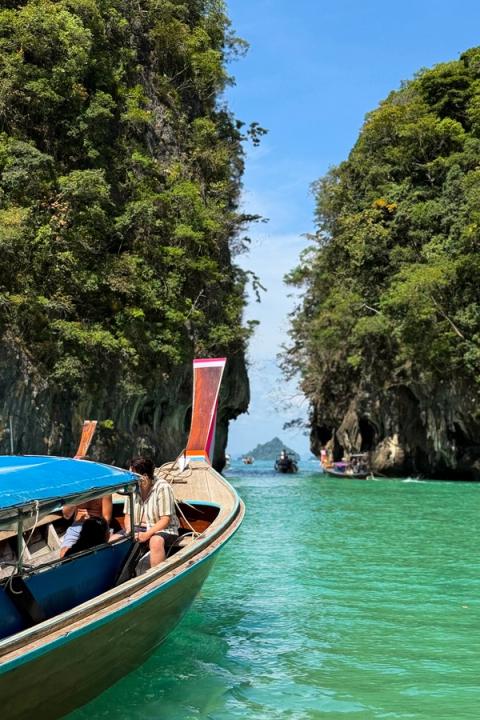
Check out one of these amazing boat tours. You can choose from luxury boats including dinner to private and cozy longtail boats
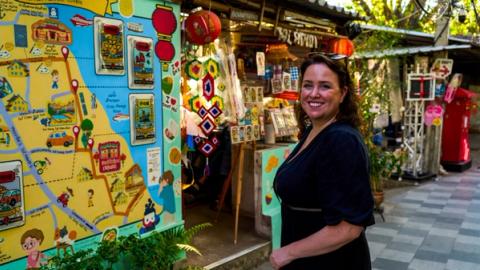
Bangkok has an extensive bus network, and buses are generally one of the cheapest ways to travel around the city. However, they are harder to understand so I wouldn’t try to figure it out if you’re just in Bangkok for a short trip.
There are lots of routes, traffic affects journey times and figuring out exactly where to get on and off can take more work than simply jumping on the BTS or MRT.
If you're travelling on a very tight budget or want to experience Bangkok more like a local, buses are worth considering. But for a first visit, I would stick to the trains, boats, taxis and Grab unless the bus route is particularly convenient.
The main public transportation options used by tourists are widely used by locals and visitors alike. I’ve never had a bad experience and don’t know any who have. It’s always felt very safe to use for me at least.
However, as with any major city, keep an eye on your belongings in crowded stations and vehicles, particularly when trains are packed. On motorbike taxis, wear a helmet and only use one if you're comfortable with the conditions. For taxis and ride-hailing services, check the vehicle and driver details before getting in. And with tuk-tuks, agree on the price before you start the journey.

I personally use SafetyWing and highly recommend it for every kind of trip. Check their prices & plans here.
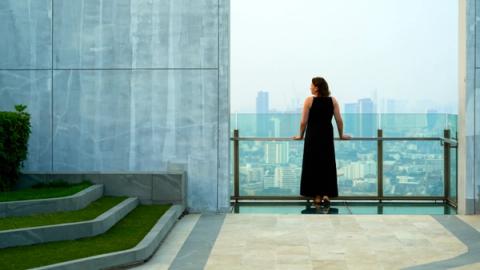
Below I’ve found the three best hotels in various areas of Bangkok. If you want to read the full guide on the best areas to base yourself, check out this article.
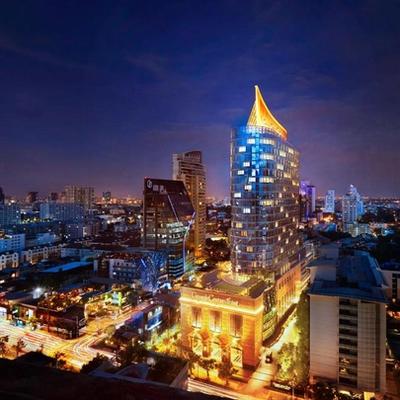
Located in the Thong Lo part of Sukhumvit, this hotel puts you closer to Bangkok's trendy restaurant and café scene while still giving you BTS access. The property has a large outdoor pool and spa facilities, making it a good choice if you want to combine sightseeing and comfort.
Check prices and availability
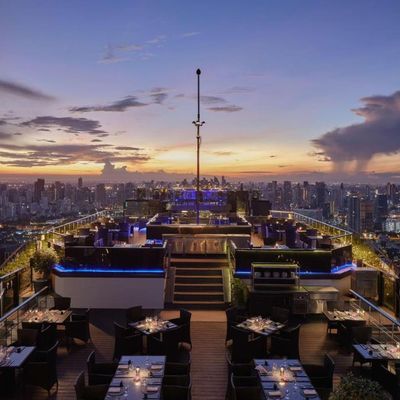
Banyan Tree is one of the area's best-known luxury hotels and is famous for its spectacular Vertigo and Moon Bar rooftop. The high-rise rooms, spa and skyline views make this a particularly memorable choice if you're looking for a special Bangkok stay.
Check prices and availability
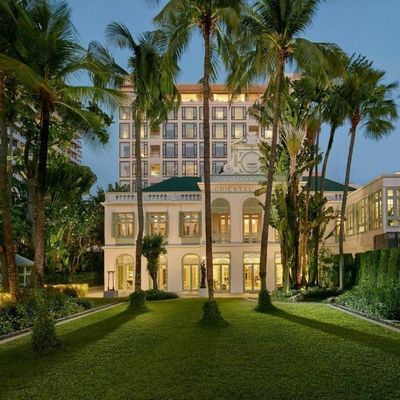
The Mandarin Oriental is one of Bangkok's legendary hotels and has occupied its riverside position for well over a century. It combines old-world elegance with excellent dining, a beautiful riverside setting and the hotel's famous Authors' Wing, making it a particularly atmospheric choice for a special stay.
Check prices and availability
Below you'll find a map where I've pinned my favourite hotels in Bangkok to make it easier for you to navigate when you're looking for where you want to base yourself.
For most tourists, the easiest combination is the BTS Skytrain, MRT, river boats, Grab and metered taxis. Use the trains when possible to avoid traffic and use cars for places that aren't conveniently connected.
Neither is universally better. They cover different routes. Check which system is closest to your destination and use whichever gives you the easiest journey.
Not necessarily. Metered taxis can be cheaper, while Grab gives you the convenience of seeing the price before booking. The final cost also depends on traffic, distance and demand.
Yes, traffic can be extremely heavy, particularly during commuter periods and in bad weather. This is why the BTS, MRT and river boats are so useful.
As a general guide, avoid relying on cars during the morning commuter period around 7–9 AM and evening period around 5–7 PM. Traffic can vary considerably depending on the area and weather.
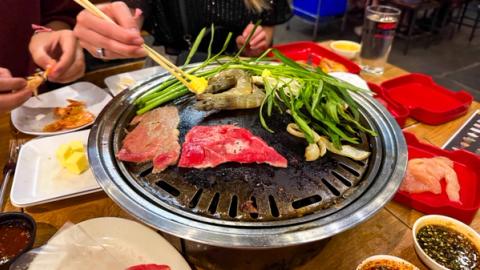
Yes, and I recommend walking around individual neighbourhoods. But Bangkok is hot and spread out, so combining walking with public transportation is usually much more practical than walking everywhere.
Tuk-tuks are a common form of transport in Bangkok, but you should agree on the fare before starting the journey and use normal precautions.
Walking and public buses are among the cheapest options. BTS, MRT and river boats are also relatively inexpensive and are often the best combination of price, convenience and speed for tourists.
Some Bangkok transport systems now support contactless EMV cards, particularly the MRT network, but payment methods vary between services. It's still a good idea to carry some Thai baht.
Find the highest rated tours and experiences here! Compare prices and book your activities in advance to get the most of your trip!
If you're feeling overwhelmed by all the different ways to get around Bangkok, don't be. You really only need to remember a few things:
BTS and MRT = avoid the traffic.
Boats = great for the river and Old Town.
Grab/taxi = convenient when trains don't go where you need them to.
Tuk-tuk = fun experience.
Motorbike taxi = fast for short journeys if you're comfortable on a motorbike.
Walking = the best way to explore once you're in the neighbourhood you want to see.
And most importantly, don't judge Bangkok journeys by distance alone. A five-kilometre journey can be incredibly quick on the train and painfully slow in a taxi.
Once you get used to checking the BTS, MRT and boat options before automatically getting in a car, Bangkok becomes much easier to navigate and you'll spend a lot less time sitting in traffic.
Hopefully this guide has given you everything you need to plan how to get around in Bangkok. To make planning the rest of your trip even easier, I've included all the resources I personally use when I travel.
Every recommendation is based on tools and services I genuinely use and would recommend to friends and family.
By using these links you help me continue to create free travel guides like this one.
Thank you for supporting Travels with Ingrid!
If you have any questions about travel in Thailand, or just want to follow along as I travel the world full time, don‘t hesitate to reach out to me on social media.
I would love to connect and help out!
-Ingrid